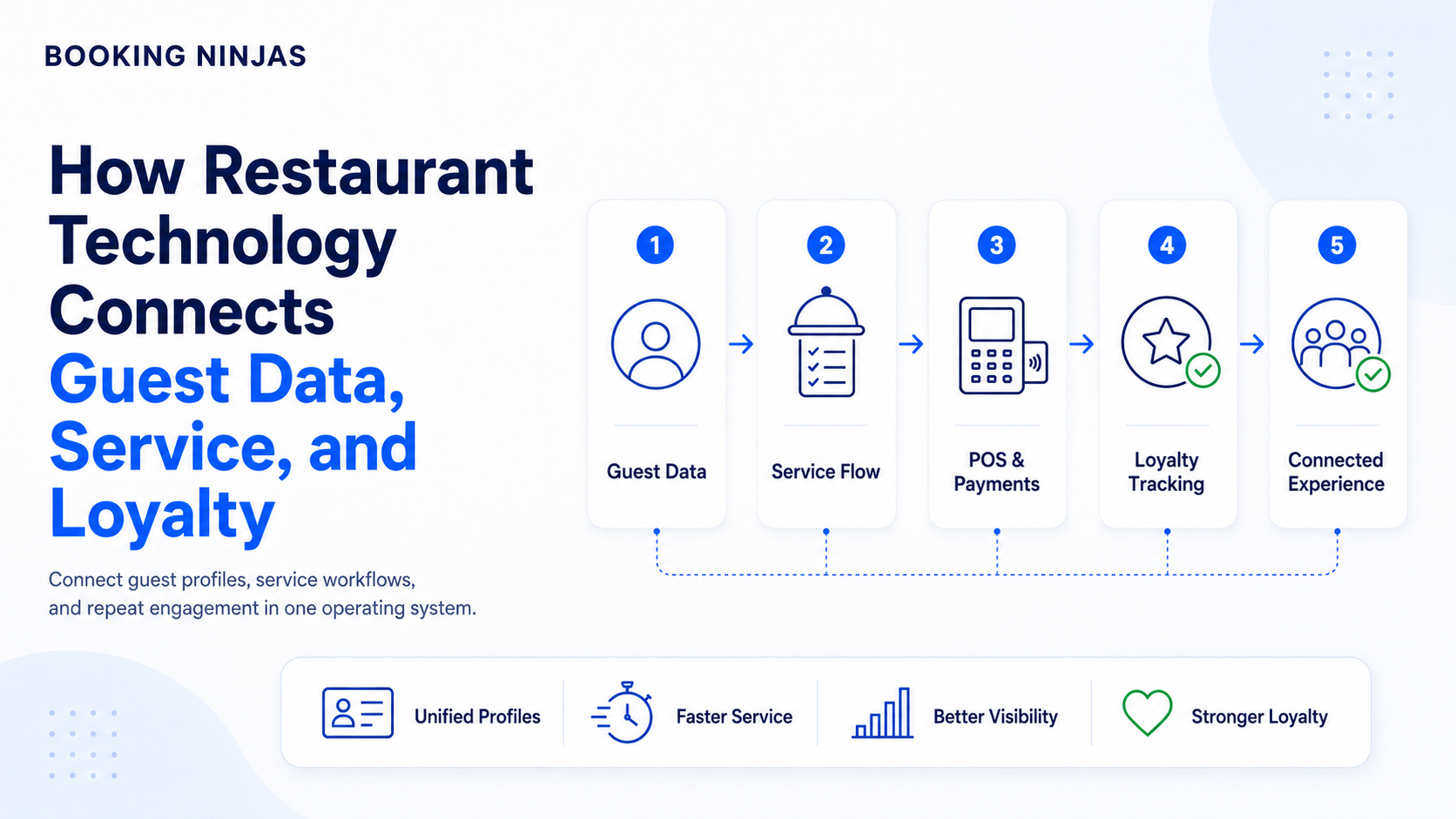
Restaurant loyalty is difficult to manage when reservations, customer records, payments, service history, and communication live in separate systems. Staff may recognize regulars personally while the technology behind the restaurant does not.
Why does restaurant customer data become fragmented?
A restaurant may use different systems for reservations, payments, marketing, customer communication, and service. Each application may work well on its own while still holding only part of the guest relationship.
What often gets separated
- Guest identity and contact information
- Reservation and visit history
- Preferences and important notes
- Charges and payment activity
- Service requests or issues
- Marketing and follow-up activity
What should a connected restaurant guest record include?
| Information | Why it can matter | Operational connection |
|---|---|---|
| Guest profile | Provides the identity and relationship record other activities can connect to. | Salesforce-native customer records |
| Reservations | Shows current and previous booking activity associated with the guest. | Reservation Management |
| Financial activity | Keeps relevant billing or payment information associated with the underlying customer activity. | Billing & Payment |
| Stored balances and credits | Prepaid value, credits, gift value, or similar balances can remain connected to the customer and financial workflow. | Stored Value Management |
| Requests and issues | Helps teams understand unresolved or previous service interactions. | Request Management |
| Follow-up | Allows known events or record changes to trigger structured operational actions. | Workflow & Process |
| External marketing or loyalty tools | Existing customer-engagement systems may need selected data from the operating platform. | Integrations |
How does connected technology support restaurant loyalty?
The useful workflow is less complicated than a large loyalty platform may suggest.
Identify the guest and connect the current interaction to their existing record.
Give staff relevant history, preferences, and operational context where appropriate.
Use that context to support the current reservation, request, or service interaction.
Route relevant post-visit or relationship activity through configured workflows or connected systems.
Where should CRM, stored value, and automation fit?
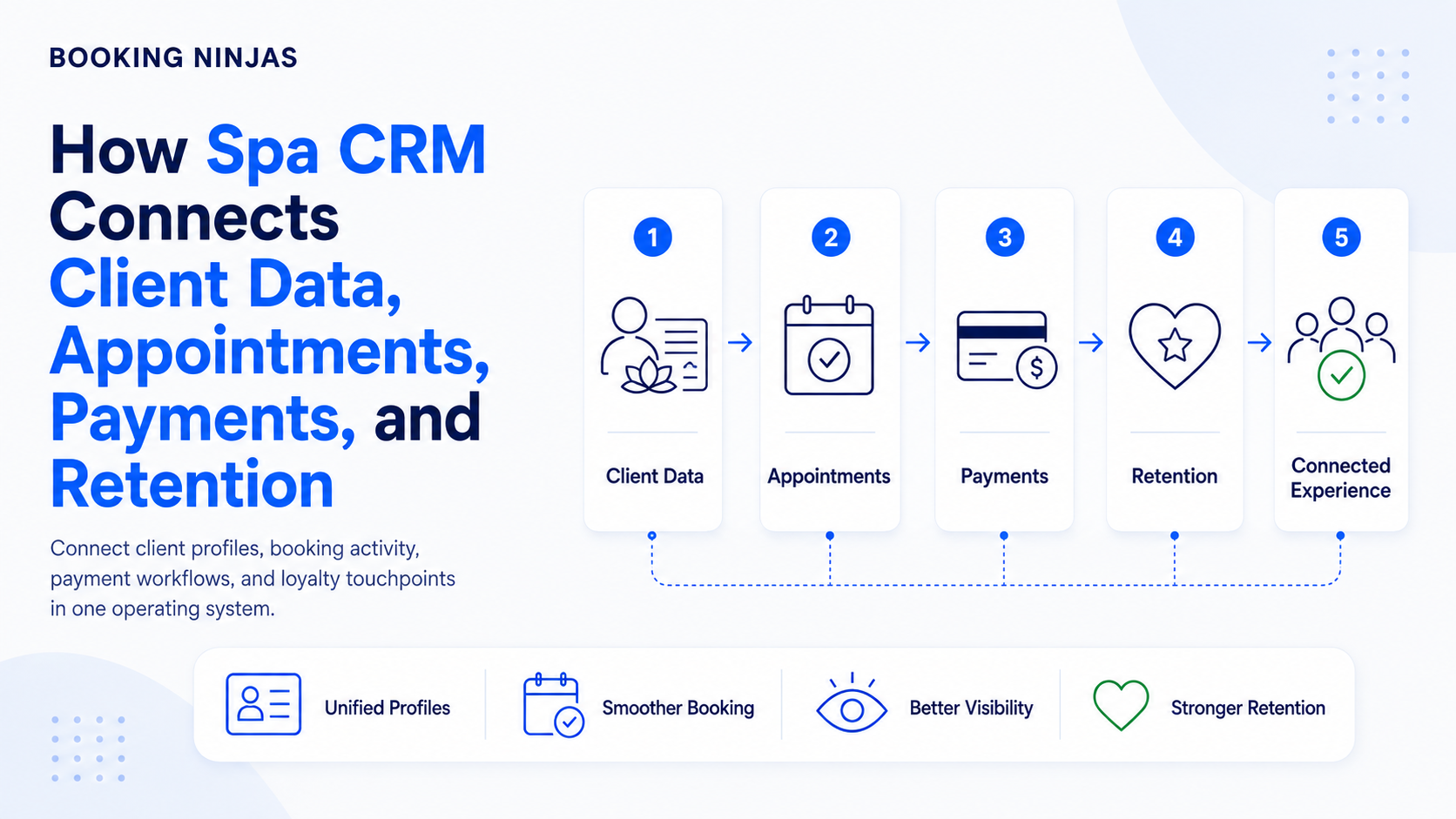
CRM can organize the relationship around the guest, while automation handles predictable actions that follow from known events or statuses.
How does stored value connect to the guest relationship?
Financial relationships can extend beyond an individual restaurant transaction. A business may use prepaid balances, credits, gift value, or other forms of customer-held value that need to remain connected to the person or account that owns them.
Booking Ninjas' Stored Value Management provides a relevant financial layer for operating models that use stored balances or credits alongside broader billing and payment workflows.
What should restaurant automation handle?
A workflow might route an unresolved service request, create an internal follow-up task, update a customer status, or pass selected information to another system. Marketing, loyalty, POS, and communication tools can remain connected through integrations where they are part of the restaurant's technology stack.
This distinction matters: automation should execute defined processes , while staff still determine how customer relationships, sensitive situations, and exceptions should be handled.
How does Booking Ninjas support connected guest operations?
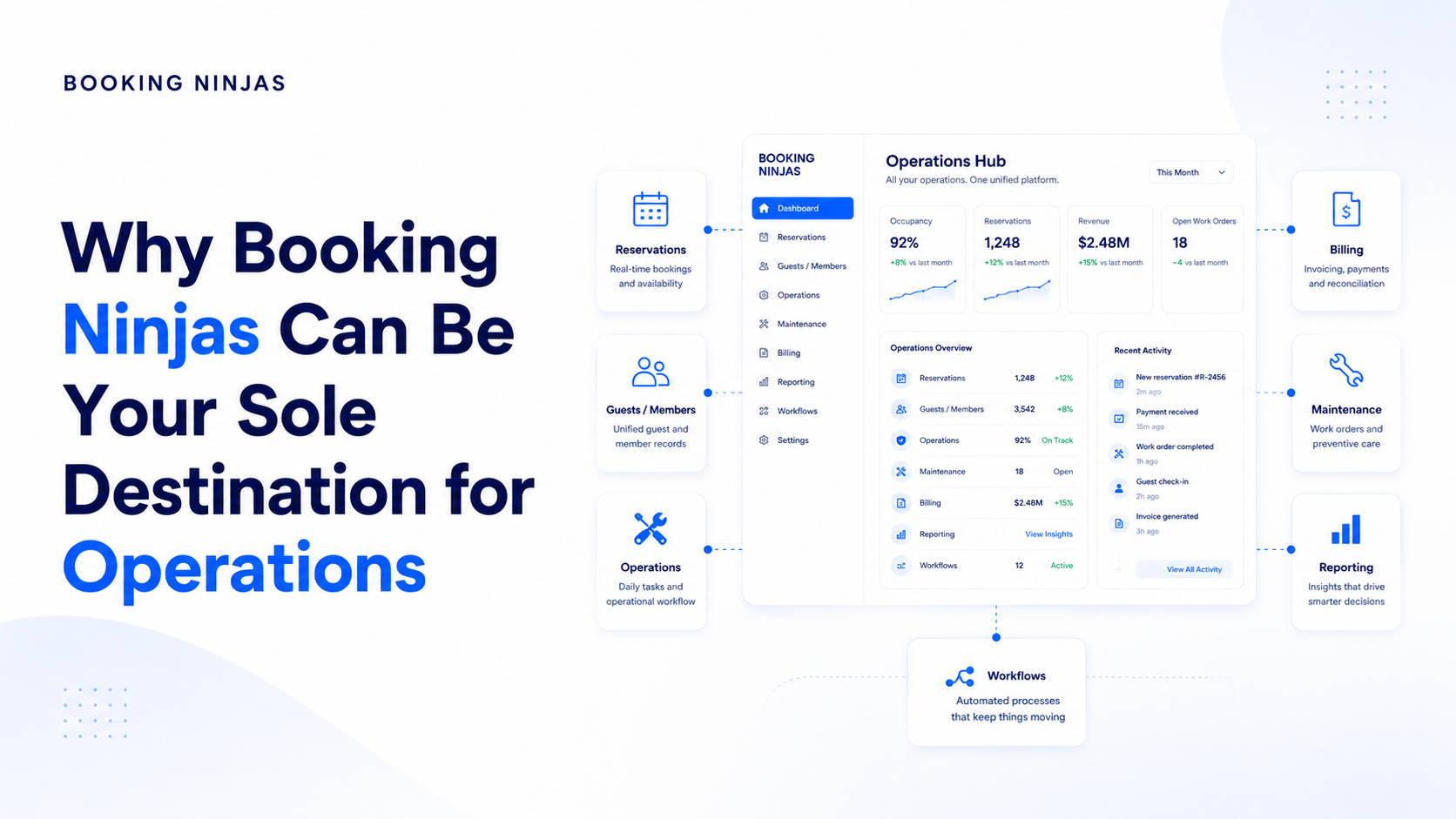
Booking Ninjas is a Salesforce-native platform for bookings and operations . The platform can keep customer records closer to reservations, financial activity, requests, workflows, and other operational information rather than maintaining CRM as a completely separate layer.
Financial capabilities can also connect billing, payments, and stored customer value to the broader operational record. This can be useful when a restaurant or related business model uses credits, prepaid balances, gift value, or other stored-value arrangements.
Because it is built on Salesforce, organizations can use a configurable foundation for records, relationships, permissions, workflows, integrations, and application logic as the operating model develops.
Booking Ninjas does not need to replace every restaurant system. Existing payment, marketing, accounting, POS, loyalty, or other applications can remain part of the architecture when an integration is the better approach.
Frequently asked questions
How can restaurant software support customer loyalty?
Restaurant software can support loyalty by keeping customer identity, reservations, preferences, service history, payments, and follow-up connected so teams have more context across repeat interactions.
Does a restaurant need a points program to build loyalty?
No. Points and rewards can be useful for some businesses, but loyalty can also depend on recognition, consistent service, relevant communication, issue resolution, and continuity across visits.
How can stored value fit into restaurant customer management?
Stored value can represent prepaid balances, credits, gift value, or similar customer-held amounts. Connecting those balances to the customer and wider payment workflow can give staff clearer financial context across future interactions.
What does CRM add to restaurant operations?
CRM provides a structured record of the customer relationship. When connected to operational activity, it can help teams understand reservations, history, requests, communication, and other relevant interactions around the same customer.
Does Booking Ninjas replace a restaurant POS or loyalty platform?
Not necessarily. Booking Ninjas is a Salesforce-native bookings and operations platform. Existing POS, loyalty, marketing, accounting, or other systems can remain part of the operating architecture where integration is appropriate.
Connect the guest relationship to the operation behind it
Bring customer records, reservations, payments, stored value, requests, workflows, and connected systems into a clearer operating environment.