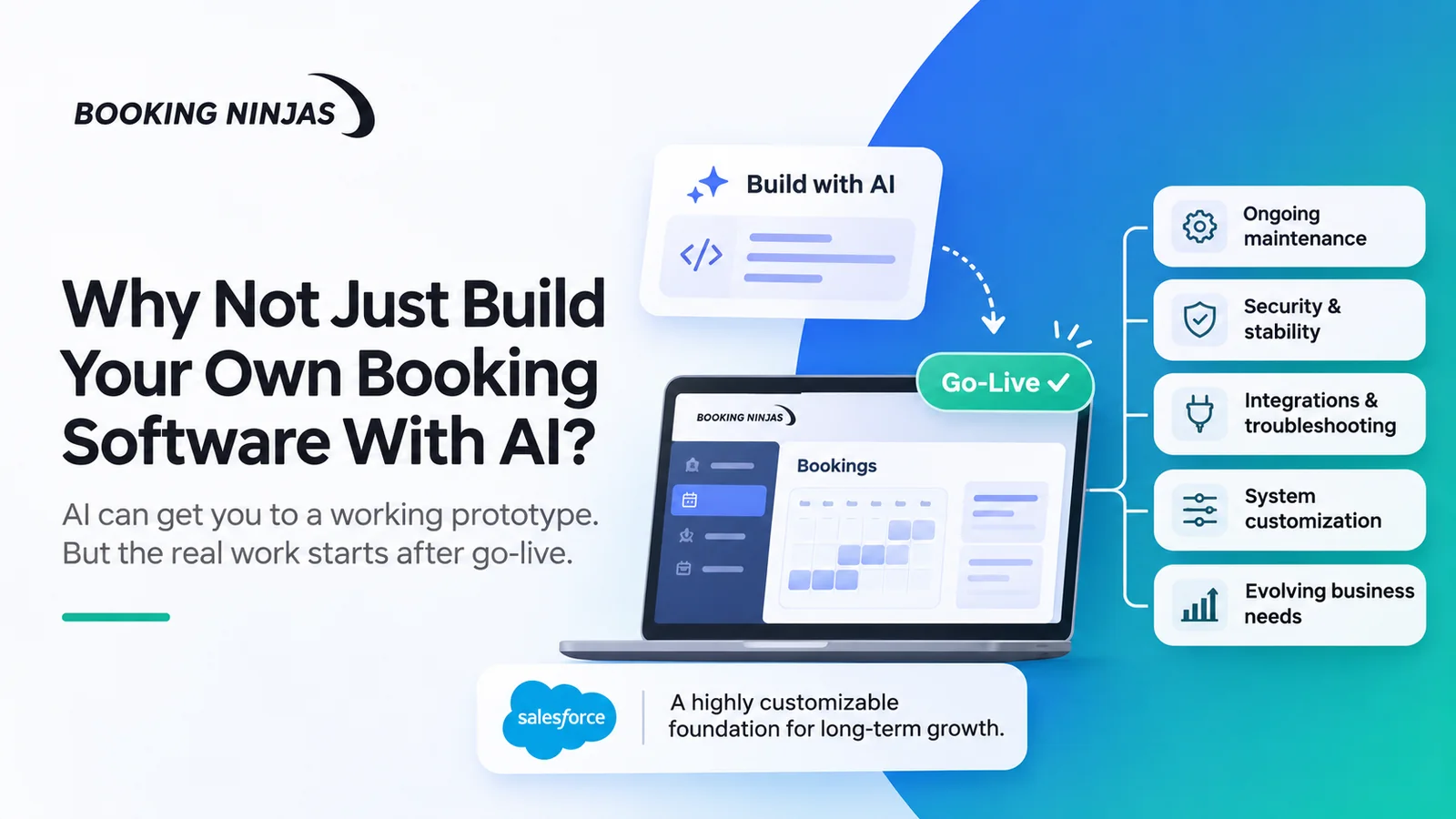
With AI coding tools like ChatGPT, Claude, and Cursor making it easier for almost anyone to create an application, there's a fair question that more business owners are probably going to ask: Why not just build our own booking software?
Why pay a software company every month when you can describe what you want to AI and have a working application in a relatively short time?
We understand the appeal. And we're not against it. We think it's great that more people can now turn their ideas into working software.
But there's one part of the conversation that doesn't get nearly enough attention.
The real work begins after go-live
Getting your application to work for the first time is an exciting milestone. You have a booking form, an availability calendar, a customer database, maybe a payment gateway, and a dashboard that brings everything together.
You test it. It works. Everyone is happy.
Then real customers start using it.
The software lifecycle doesn't stop at launch
Build
- Define requirements
- Generate code
- Design interfaces
- Test functionality
Go-live
Your business starts depending on it.
Operate, maintain, evolve
- Investigate production issues
- Handle unexpected business cases
- Maintain security and integrations
- Improve performance
- Protect existing customer data
- Develop new capabilities
- Support employees and customers
Once your system goes live, it is no longer just an application you're experimenting with. It holds real reservations, customer information, payments, invoices, and the records your employees depend on.
Every change you make from that point forward has the potential to affect something that is already working.
What happens when real people start using your AI-built software?
Real operations rarely follow the perfect workflow you had in mind when you first described the application to AI.
People make mistakes. Customers change their minds. Payments fail. Employees discover exceptions. Business requirements evolve.
Unexpected booking conflicts
Two customers try to reserve the same resource at nearly the same time. The system needs to prevent conflicting reservations even when multiple users or channels are involved.
Payment and billing exceptions
A payment succeeds but the reservation doesn't update. A refund is processed but the invoice remains unchanged. Someone has to investigate what happened without creating duplicate charges.
Data inconsistencies
A change to a booking record affects reporting, customer balances, availability, or another workflow in ways that were not originally anticipated.
New security requirements
Different employees need different levels of access. Customer-facing portals must not expose private information. Security controls need to evolve as the organization grows.
External systems change
A payment gateway changes its API, an accounting integration stops working, or a booking channel introduces a new requirement.
The business wants something new
A new location opens. Memberships are introduced. Management wants more detailed reporting. Employees need a different approval process. The original application has to evolve.
AI can help investigate and develop solutions for many of these problems. But somebody still needs to understand the affected systems, evaluate the proposed changes, and take responsibility for the outcome.
That responsibility does not disappear just because AI generated the original code.
What happens when you can't prompt your way out of a problem?
Imagine you've built your own booking application with AI. It's been running for six months, and your entire team is now using it.
One morning, something goes wrong.
The customer paid, but the booking isn't confirmed.
Your customer has received a payment notification. However, your booking system still shows the reservation as pending.
Before changing anything, someone needs to understand:
- Did the payment gateway complete the transaction?
- Did the payment notification reach the application?
- Was the payment linked to the correct booking?
- Did a database update or automation fail?
- Is the resource still being held for the customer?
- Could retrying the transaction create a duplicate charge?
- Are other reservations affected by the same issue?
This is no longer just a question of asking AI to generate a new booking form or change a button. There is real money and real customer data involved.
A non-technical employee might be very good at describing the problem to an AI tool. They may even receive a convincing explanation and a proposed code change.
But knowing whether that change is safe requires a different level of understanding.
An experienced engineer needs to be able to investigate the underlying application, trace the data, understand the integrations, reproduce the issue, and verify that the proposed solution does not break another part of the system.
Investigate
Review transaction records, application logs, integration responses, and affected bookings.
Find the root cause
Determine whether the issue comes from application logic, automation, permissions, data, or an external service.
Develop and test a fix
Reproduce the issue in a suitable test environment and verify the change against other booking and financial scenarios.
Deploy and recover
Release the validated change, reconcile any affected records, and monitor the system to confirm that the issue has been resolved.
Vibe coding makes software creation more accessible. It doesn't eliminate software engineering.
We like the idea of giving non-technical people more control over technology.
A business owner should be able to express an idea. A front desk manager should be able to describe a better booking workflow. An operations manager should be able to explain what their employees need to work more efficiently.
AI makes it easier to turn those ideas into something tangible.
But there's a difference between understanding what a business needs and understanding how to implement it safely within a live software system.
An experienced software engineer brings knowledge of architecture, database relationships, security, integration behavior, performance, testing, deployment, and technical dependencies.
Those skills become particularly important when the application has grown beyond its original requirements and is already supporting real business activity.
AI can make experienced engineers more productive. It can also help non-technical people participate in development. But it doesn't automatically give everyone the engineering judgment needed to manage a complex production environment.
This is one of the reasons we built Booking Ninjas on Salesforce
When we talk about Booking Ninjas being Salesforce-native, we're not just talking about having access to a CRM.
Salesforce provides an established software development and application platform that allows businesses to customize their environment at multiple levels.
Some changes can be made through configuration. Others require automation, custom development, integrations, or architectural decisions made by experienced engineers.
What a customizable Booking Ninjas environment can build on
Custom applications, workflows, and AI
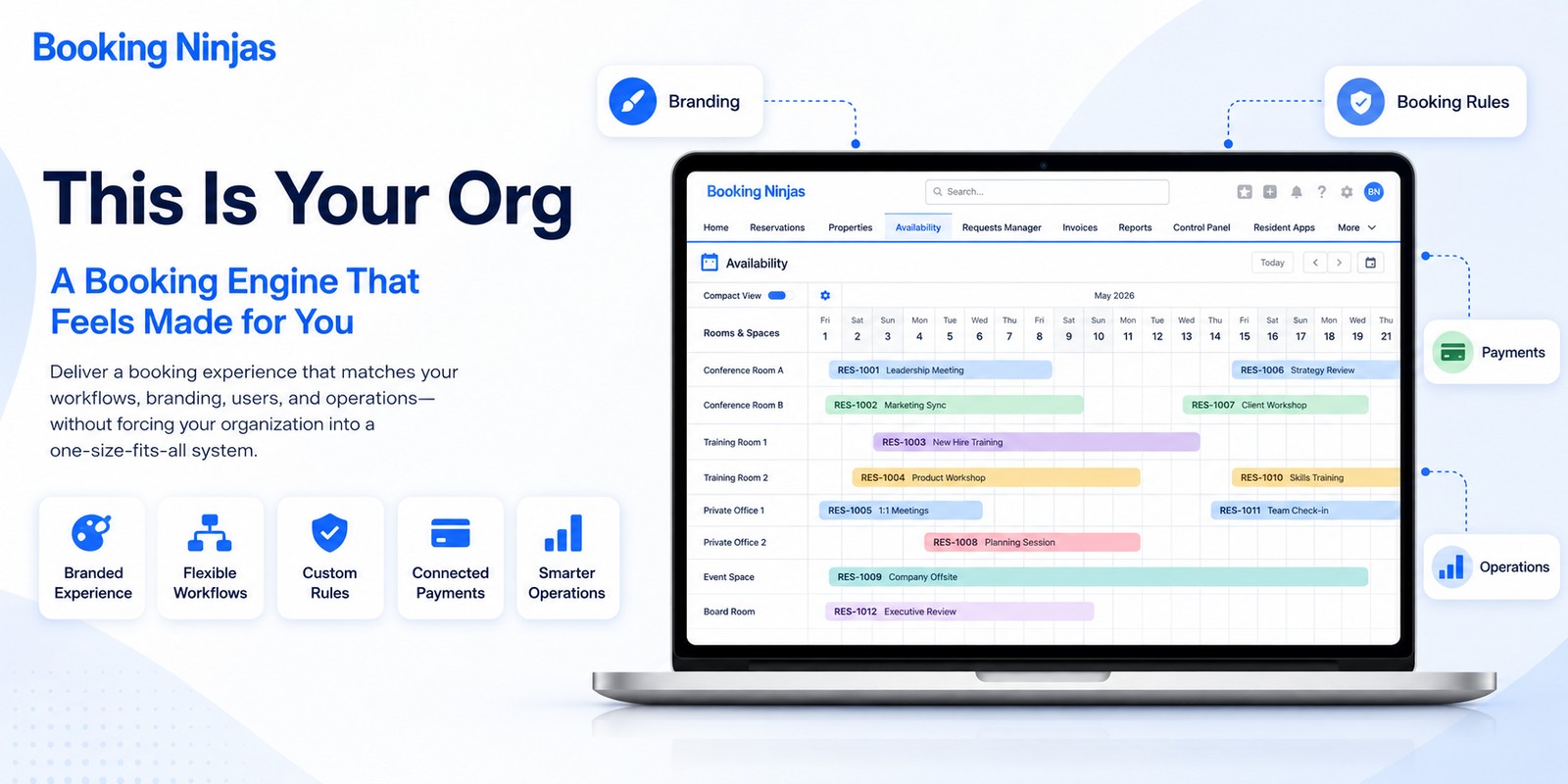
Your specific business rules, integrations, interfaces, reporting requirements, and applications can be configured or developed around the existing operating environment.
Existing booking and operations capabilities
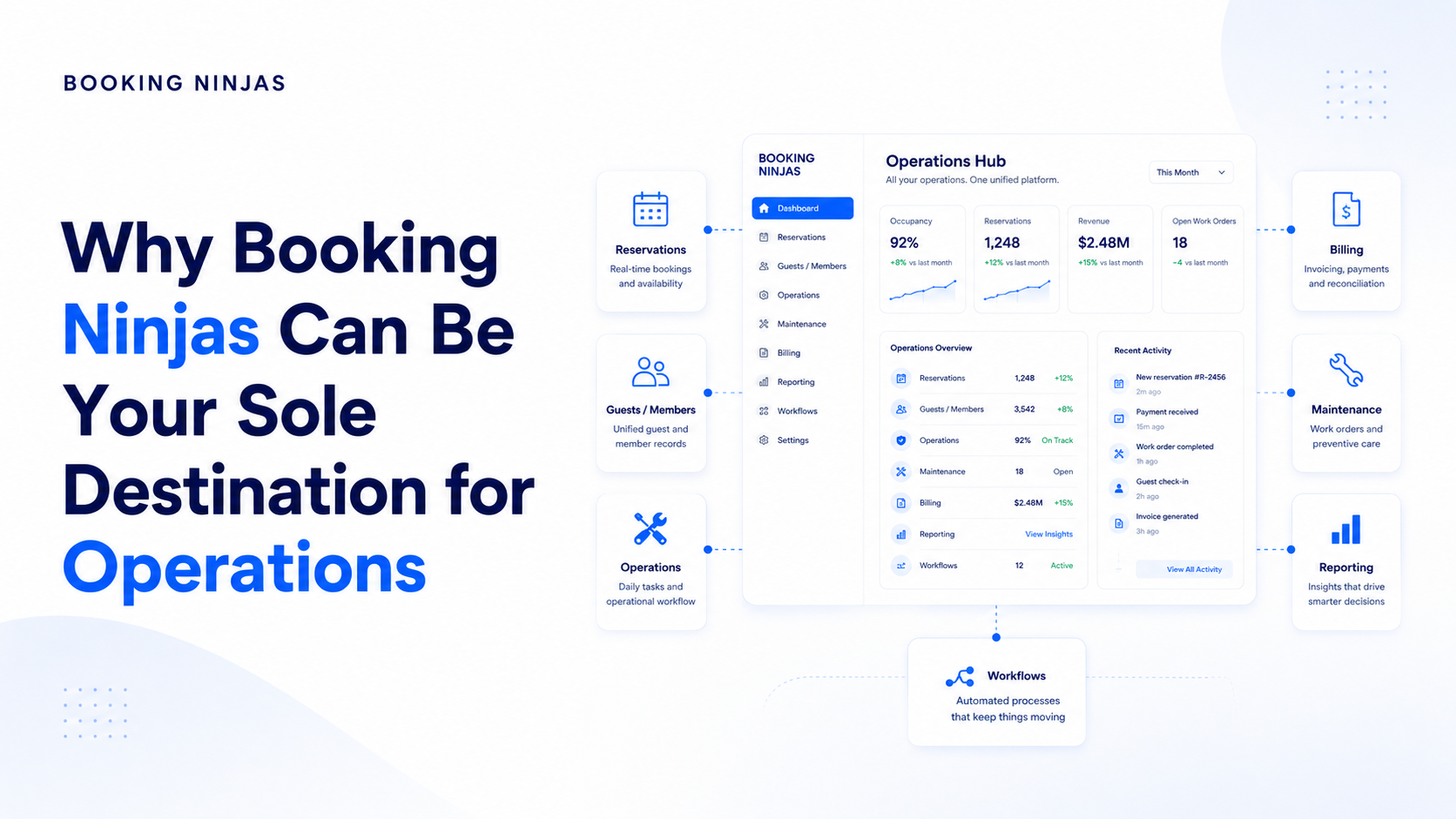
Reservations, availability, rates, billing, customer records, memberships, events, POS, portals, and operational workflows, assembled according to the business's requirements.
An established technical foundation
Data models, permissions, automation, application development, APIs, testing, deployment tools, and platform infrastructure.
Instead of beginning with an empty application and building everything yourself, you can start with the Booking Ninjas Core Package and extend the environment as your operational requirements become clearer.
The Salesforce-native foundation gives experienced developers established tools and development patterns to work with when additional functionality is needed.
How deeply can experienced engineers customize a Salesforce-native system?
Salesforce allows customization beyond changing the appearance of an application or adding a few fields to a form.
Depending on the architecture, permissions, licensing, and available extension points, engineers can work with the underlying data model, business logic, automation, interfaces, and integrations.
Create and configure custom objects, fields, and record relationships so that new business requirements can connect to existing data.
Use Salesforce Flow, validation rules, formulas, and Apex to support business rules, approvals, calculations, and operational processes.
Develop purpose-built interfaces and Lightning components for employees who need a different way to interact with business records.
Configure object permissions, field access, record sharing, and other security controls around the organization's requirements.
Connect external applications and services through supported APIs, connectors, and custom integration logic where necessary.
Use available logs, monitoring tools, and development environments to investigate unexpected application behavior.
Develop and validate changes in appropriate environments before introducing them into the live system.
Salesforce's own Apex debugging, testing, and deployment documentation explains the development tools available for diagnosing, testing, and releasing programmatic changes.
Its Well-Architected Framework also provides guidance for designing solutions that remain secure, reliable, maintainable, and adaptable over time.
This is a meaningful difference between simply having an application that works and having an established technical environment that experienced engineers can continue working with.
This does not mean every part of Salesforce or a managed application can be modified directly. Engineers must work within supported extension points, platform limits, package boundaries, permissions, and the agreed implementation scope.
Your requirements won't stop changing once the software is live
One thing we've learned from working with different booking businesses is that not every requirement is visible at the beginning.
Take a retreat center as an example.
Initially, the organization might only need reservations, room availability, and billing. Once the system is in use, the team may discover that it also needs:
Group organizers
A portal where organizers can review reservations, submit guest information, and manage their group's requirements.
More complex billing
Different rules for group deposits, individual charges, additional services, and final invoices.
Staff coordination
Operational workflows connecting room preparation, meeting spaces, meals, requests, and changes to attendance.
Additional integrations
Accounting information, payment services, access controls, or another application that the organization already uses.
These aren't necessarily failures of the original software implementation.
They're a natural part of a business learning what it needs from technology.
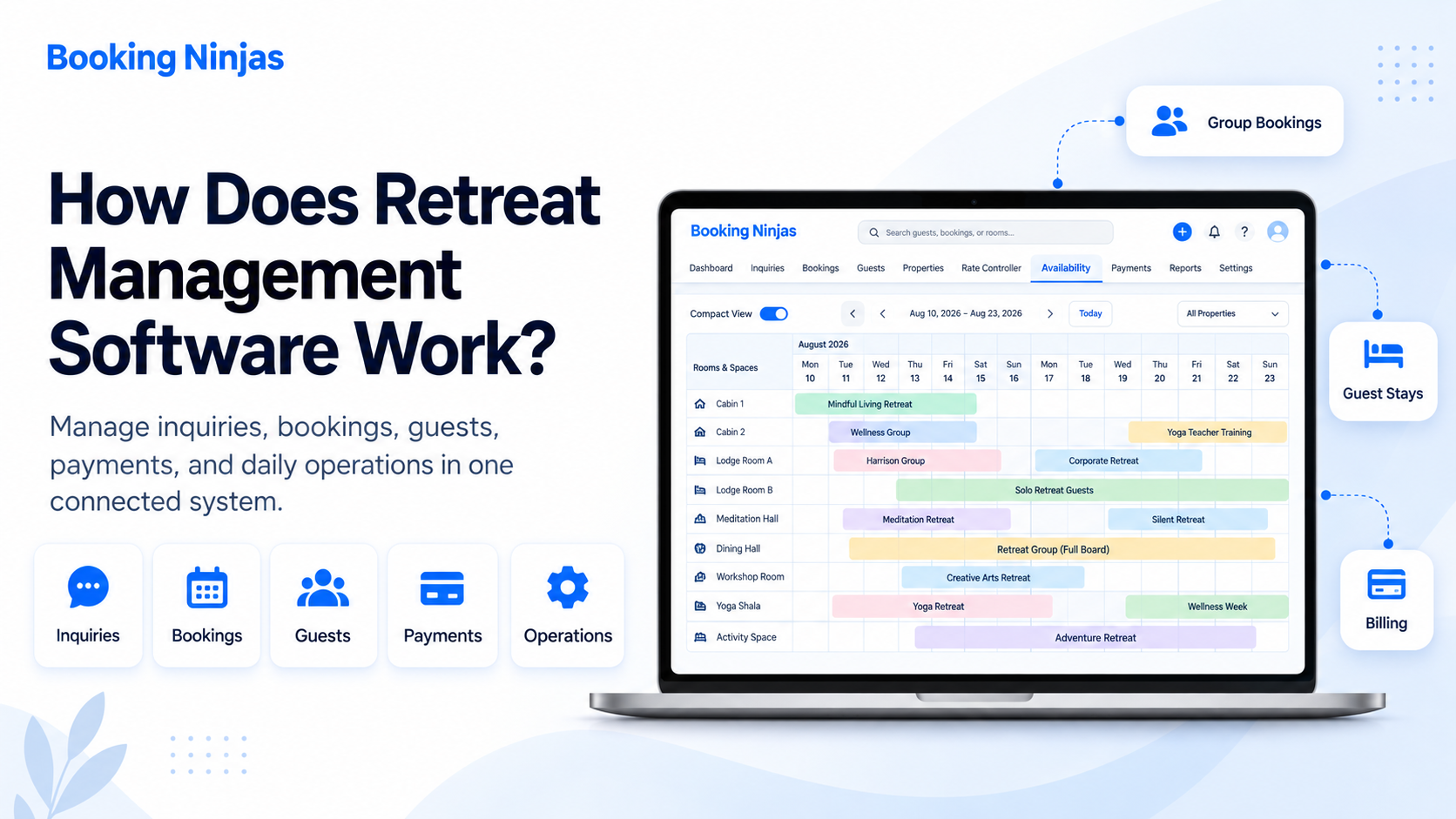
You can see how some of these requirements connect in our guide to how retreat management software works .
The important question is whether the system you have today can accommodate the requirements you'll discover tomorrow.
What if we don't have the feature you need?
Tell us.
Maybe you want QuickBooks information available directly on a customer record. Maybe you need a particular payment gateway, a different booking experience, or an AI application that helps employees manage incoming requests.
Our first question is whether the requirement can be handled using existing functionality. If not, we can look at configuration, integration, or custom development.
Start with available Booking Ninjas capabilities instead of rebuilding functionality that already meets your requirements.
Adapt supported booking rules, workflows and processes , permissions, and reporting to the way your business operates.
Evaluate existing and custom integrations for the external applications your business still needs.
Where the required functionality doesn't exist, scope a Custom Application around your specific business problem.
Are you saving money, or just taking on a different responsibility?
Building your own booking software with AI can reduce the initial development effort. For a simple application, it may even be the most economical option.
But if you are comparing the cost of building an application with the cost of a software subscription, consider what happens after launch.
Who will maintain the application? Who will investigate production issues? Who will fix broken integrations? Who will be available when your employees need technical help?
And who will take over if the person who originally built the application leaves your organization?
Initial cost
Development, configuration, deployment, testing, and migration.
Ongoing cost
Infrastructure, subscriptions, security, monitoring, maintenance, and technical support.
Change cost
New requirements, integrations, additional users, business expansion, and architectural improvements.
Business disruption
The potential cost of unavailable booking functionality, financial discrepancies, recovery work, and delayed operations.
Buying an established platform also comes with costs, including subscriptions, implementation, and applicable custom development.
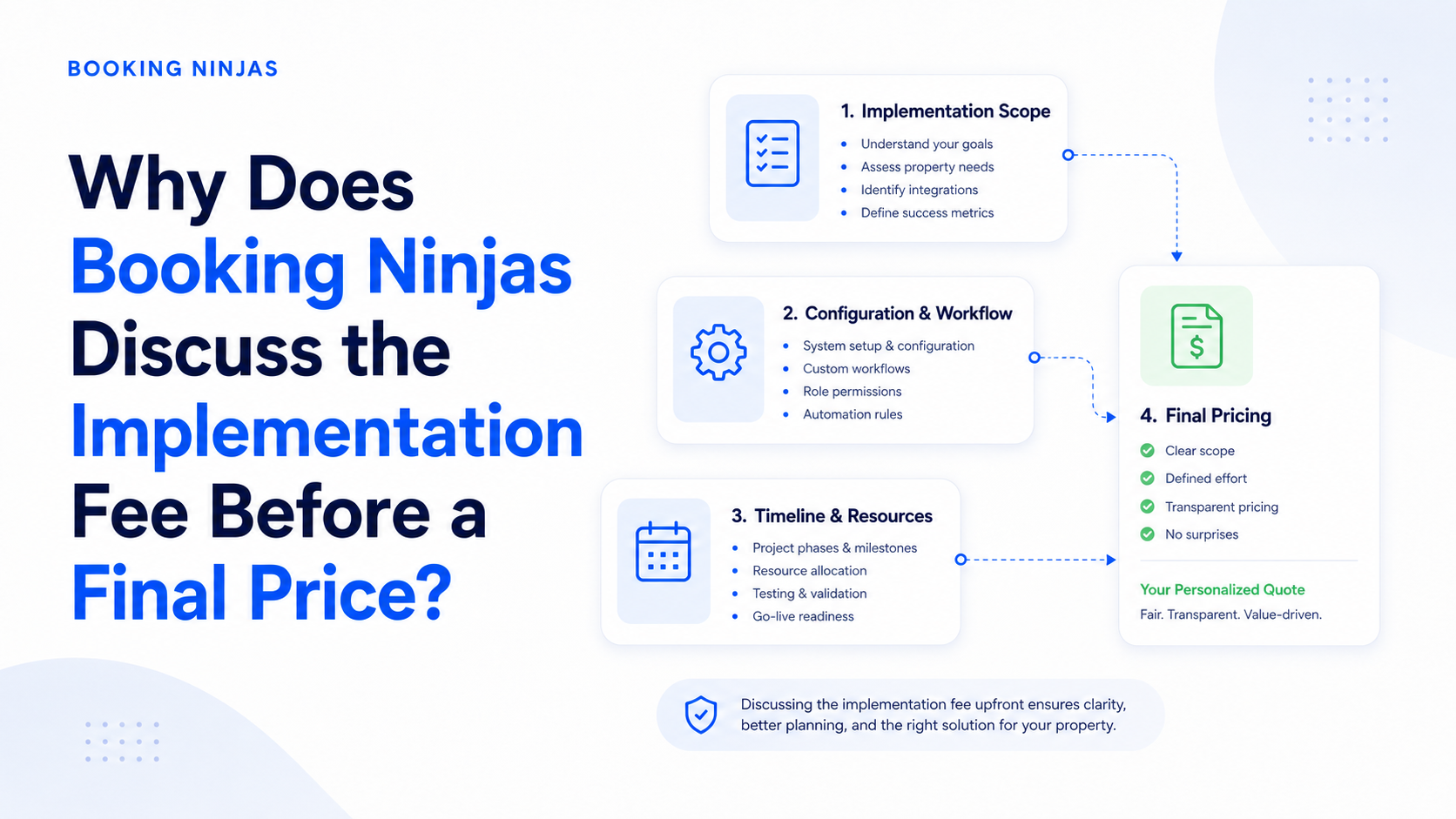
Booking Ninjas publishes its subscription pricing separately from implementation so organizations can evaluate the platform and project requirements together.
The comparison should be based on the total cost and responsibility of running the software over time, not just the cost of getting the first version working.
Building your own software vs. buying software vs. building on an existing platform
There isn't one correct choice for every business. The decision depends on how complex the operation is, how much customization it needs, and who will own the technology over time.
| Consideration | AI-assisted custom build | Standard SaaS | Booking Ninjas |
|---|---|---|---|
| Starting point | Your own application and selected technology stack | An existing vendor application | Existing booking capabilities on Salesforce |
| Post-launch ownership | Your organization or contracted development team | Shared with the vendor according to its service terms | Platform, product, and implementation responsibilities defined by scope and service terms |
| Customization | Broad control, dependent on technical resources | Depends on vendor configuration and extension options | Configuration, extensions, integrations, and scoped custom development |
| Engineering intervention | Engineers must understand and maintain the selected architecture and codebase | Core product changes generally depend on the vendor | Experienced engineers can use Salesforce development tools and supported extension points |
| Infrastructure | Selected and maintained by your team and service providers | Generally managed by the vendor | Salesforce-managed platform infrastructure with shared application-level responsibilities |
| New requirements | Design and develop additional functionality | Configuration, APIs, extensions, or vendor releases | Evaluate existing capabilities, configuration, integrations, or custom applications |
| Cost structure | Development, infrastructure, maintenance, and technical resources | Subscription, implementation, and applicable additional fees | Modular subscription, implementation, and applicable custom development |
| Best suited for | Businesses that need direct control and can own the technical responsibilities | Businesses that fit an existing product | Booking-driven businesses that need connected and adaptable operations |
This comparison describes general software delivery approaches, not individual competing products. Actual costs, maintenance arrangements, customization limits, and responsibilities vary by provider and project. Booking Ninjas is the publisher and has a commercial interest in the platform-based approach.
So, should you build your own software with AI?
You absolutely can.
If your requirements are simple, you're experimenting with an idea, or you have experienced engineers who can take ownership of the application, building your own software may make perfect sense.
We would encourage you to think beyond the initial launch, though.
Is there someone who can understand the underlying architecture and troubleshoot problems beyond generating new code?
Who will take responsibility for technical issues, dependencies, security updates, integrations, and future changes?
Can new functionality be developed, validated, and introduced without unnecessarily disrupting live operations?
Can the architecture support additional customers, resources, business rules, employees, locations, and integrations?
These are questions worth asking whether you build your own application or purchase software from an established provider.
The goal isn't simply to get software that works today. It's to have software you can continue relying on tomorrow.
We're not against vibe coding. We'd rather give you something better to build on.
At Booking Ninjas, we believe businesses should be able to create the software they need rather than being limited to whatever a standard product happens to offer.
AI makes that possibility even more exciting.
But we also believe there's value in starting with a foundation that already understands bookings, availability, financial records, operational workflows, and the relationships between them.
That's what we're building with Booking Ninjas on Salesforce.
We want business owners and employees to focus on identifying better ways to operate. Experienced engineers can then help turn those ideas into maintainable solutions within the organization's environment.
Whether the next requirement is a simple configuration change, a new integration, a custom application, or an AI-assisted workflow, the goal is to keep building on the same connected foundation where practical.
Frequently asked questions
Can a non-technical person build booking software with AI?
Yes. AI coding tools can help non-technical users create booking applications and working prototypes. However, complex production systems still require appropriate technical oversight, security, testing, troubleshooting, and ongoing maintenance.
What happens after AI-built software goes live?
Once AI-built software goes live, the organization must manage real users, customer data, transactions, operational exceptions, security, integrations, maintenance, and new business requirements. These responsibilities continue throughout the software's operating life.
Does vibe coding replace software engineers?
Vibe coding can reduce the effort required to create software, but it does not automatically replace the engineering expertise needed to evaluate architecture, diagnose complex problems, secure applications, and safely manage production changes.
Why is Booking Ninjas built on Salesforce?
Booking Ninjas uses Salesforce as its platform foundation to connect booking and operational records with configurable data models, permissions, automation, reporting, APIs, and professional application development capabilities.
Can experienced developers customize Booking Ninjas?
Yes. Authorized developers can extend the Booking Ninjas and Salesforce environment through supported configuration, automation, custom applications, interfaces, and integrations, subject to platform limitations, available extension points, permissions, and agreed scope.
Does Salesforce eliminate the need for software maintenance?
No. Salesforce manages the underlying platform infrastructure and provides established development tools, but custom applications, business logic, integrations, configuration, and application-level security still require appropriate ownership and maintenance.
Can AI be used to build new functionality within Booking Ninjas?
AI can assist with designing and developing new applications, integrations, and workflows within supported Booking Ninjas and Salesforce environments. Production use requires appropriate technical review, testing, permissions, licensing, and implementation.
Build on something that's already there.
Start with an established booking and operations platform. Tell us how your business works and what you need next. Let's explore what can be configured, connected, or built within your environment.