
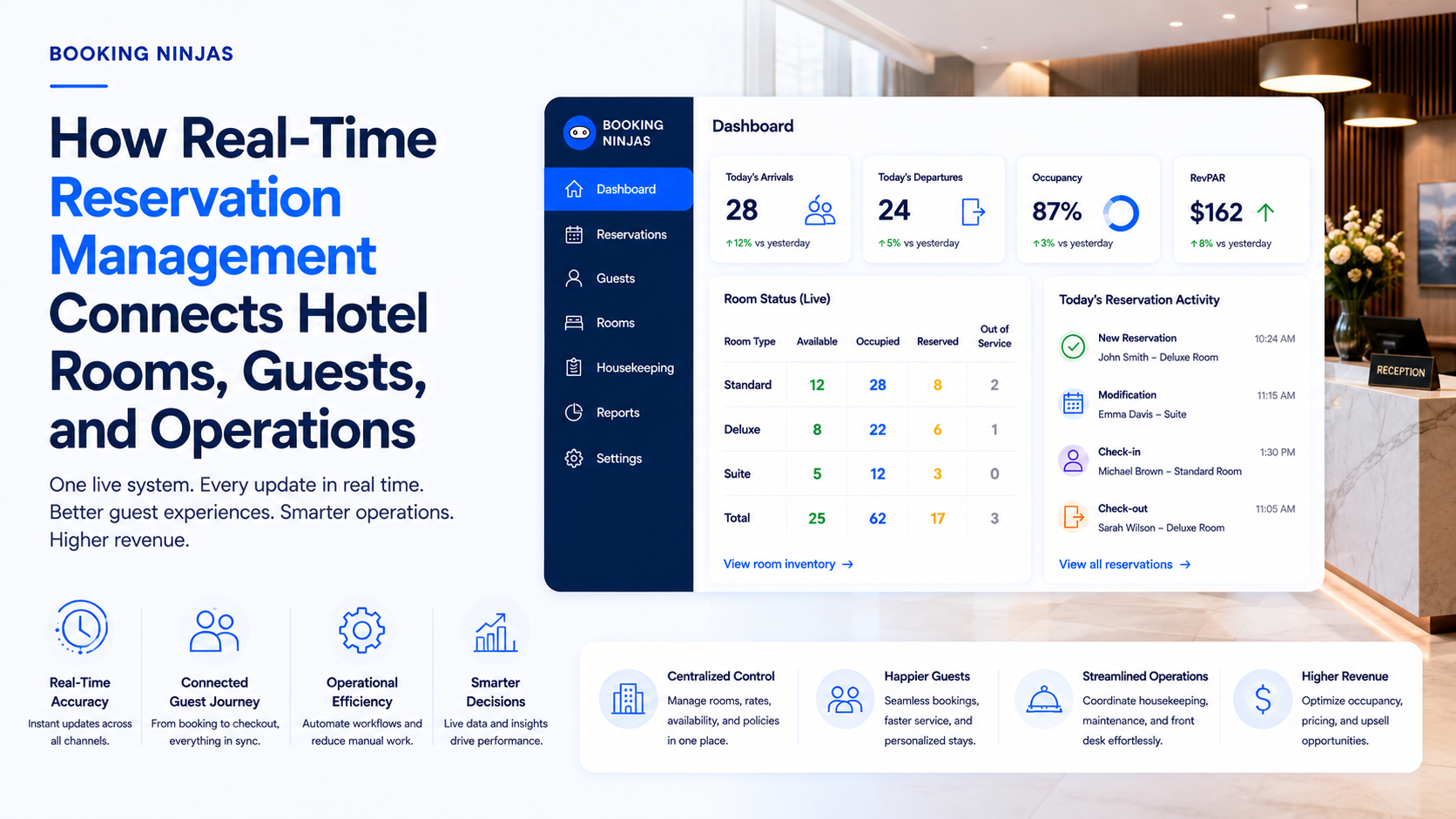
Real-time reservation management keeps room availability, reservations, guest records, rates, payments, and operational activity connected as a booking changes from initial reservation through departure.
The value is not simply that staff can see reservations faster. Real-time reservation management becomes operationally useful when the reservation acts as a connected record between inventory, people, distribution, financial activity, and the work required to deliver the stay.
What is real-time reservation management?
Real-time reservation management is the coordinated management of reservations and the records affected by reservation changes without relying on periodic manual reconciliation.
In a hotel environment, the reservation may connect:
- Property and room inventory
- Room type and availability
- Arrival and departure dates
- Guest and customer records
- Rates and reservation charges
- Booking source or channel
- Deposits, invoices, and payments
- Check-in and check-out status
- Housekeeping or service activity
- Reporting and operational history
A reservation management system therefore does more than store a booking confirmation. It maintains the booking relationship as the reservation moves through the wider hotel operation.
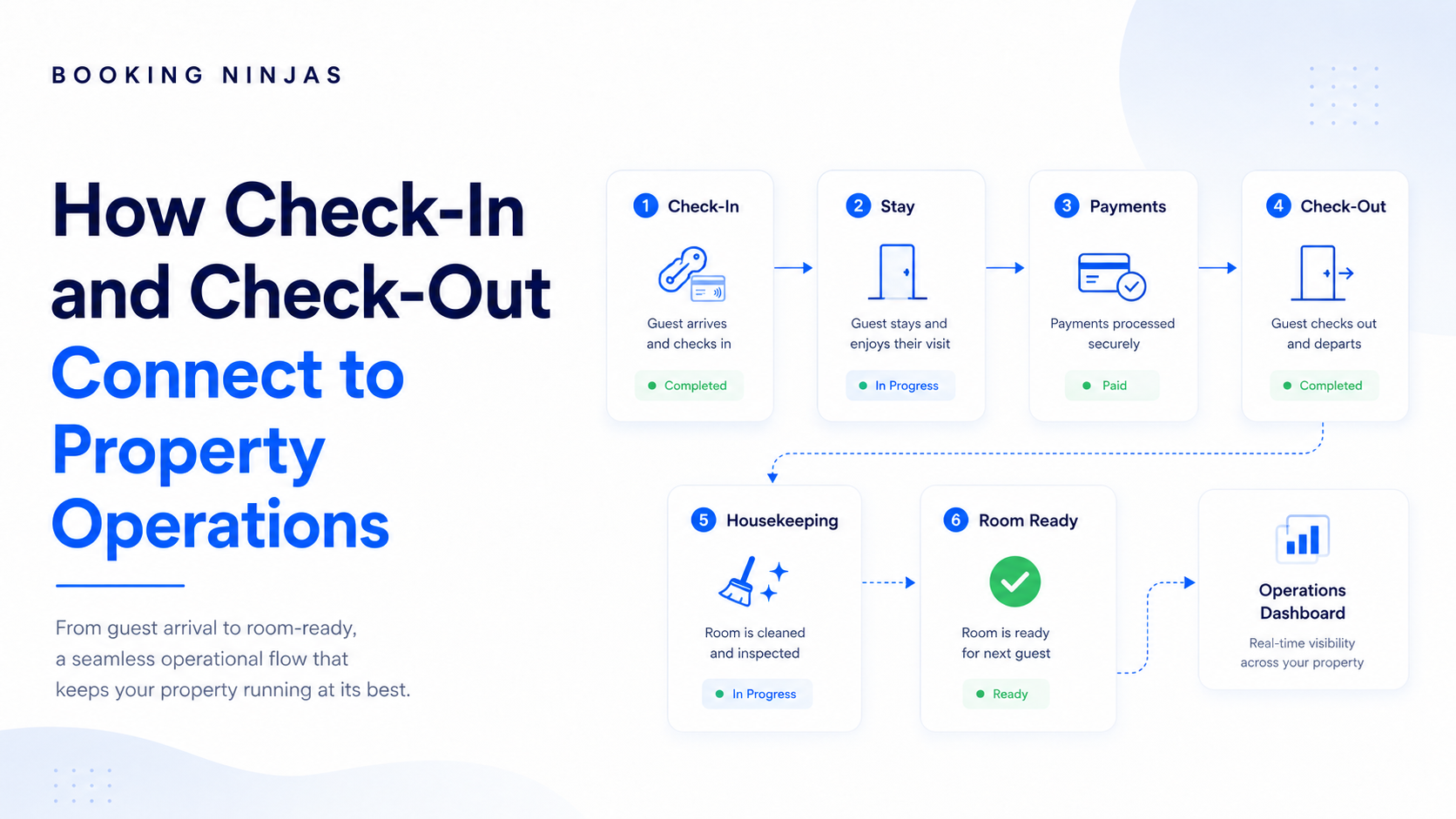
How does the reservation connect the hotel operation?
Rooms, dates, restrictions, capacity, and existing bookings determine what can be reserved.
The booking records the guest, dates, room or room type, rate, status, source, and related requirements.
Assignment, arrival, housekeeping, service, billing, and departure use the reservation as operational context.
Reservation, occupancy, revenue, channel, and operational data remain available for reporting and future decisions.
How should room availability respond when a reservation changes?
Availability should reflect the current reservation state and the rules that determine whether inventory can be sold.
Booking Ninjas' Availability Management connects availability with bookings, changes, cancellations, restrictions, capacity rules, and authorized overrides.
For hotels, relevant availability controls can include:
- Room and room-type inventory
- Existing reservations
- Blackout or restricted dates
- Maintenance-related unavailability
- Booking or stay restrictions
- Authorized inventory overrides
If a reservation is changed or canceled, the system should apply the configured availability logic rather than relying on staff to update a separate spreadsheet or calendar.
What should the reservation record contain?
A useful reservation record needs enough context for the departments and workflows that depend on it.
| Reservation information | Why it matters |
|---|---|
| Guest or customer | Connects the booking with the person or account associated with the stay. |
| Property | Identifies the operating location responsible for the booking. |
| Arrival and departure | Determines the stay period and its effect on inventory. |
| Room type or room | Connects the reservation with the inventory being committed. |
| Rate and charges | Provides the commercial context behind the booking. |
| Booking source | Shows whether the reservation originated directly or through another connected channel. |
| Status | Shows where the reservation sits in the booking and stay lifecycle. |
| Notes and requirements | Preserve relevant information needed by staff or connected workflows. |
Booking Ninjas' Reservation Management provides the structured reservation layer for creating, modifying, tracking, restricting, and reporting on bookings inside Salesforce.
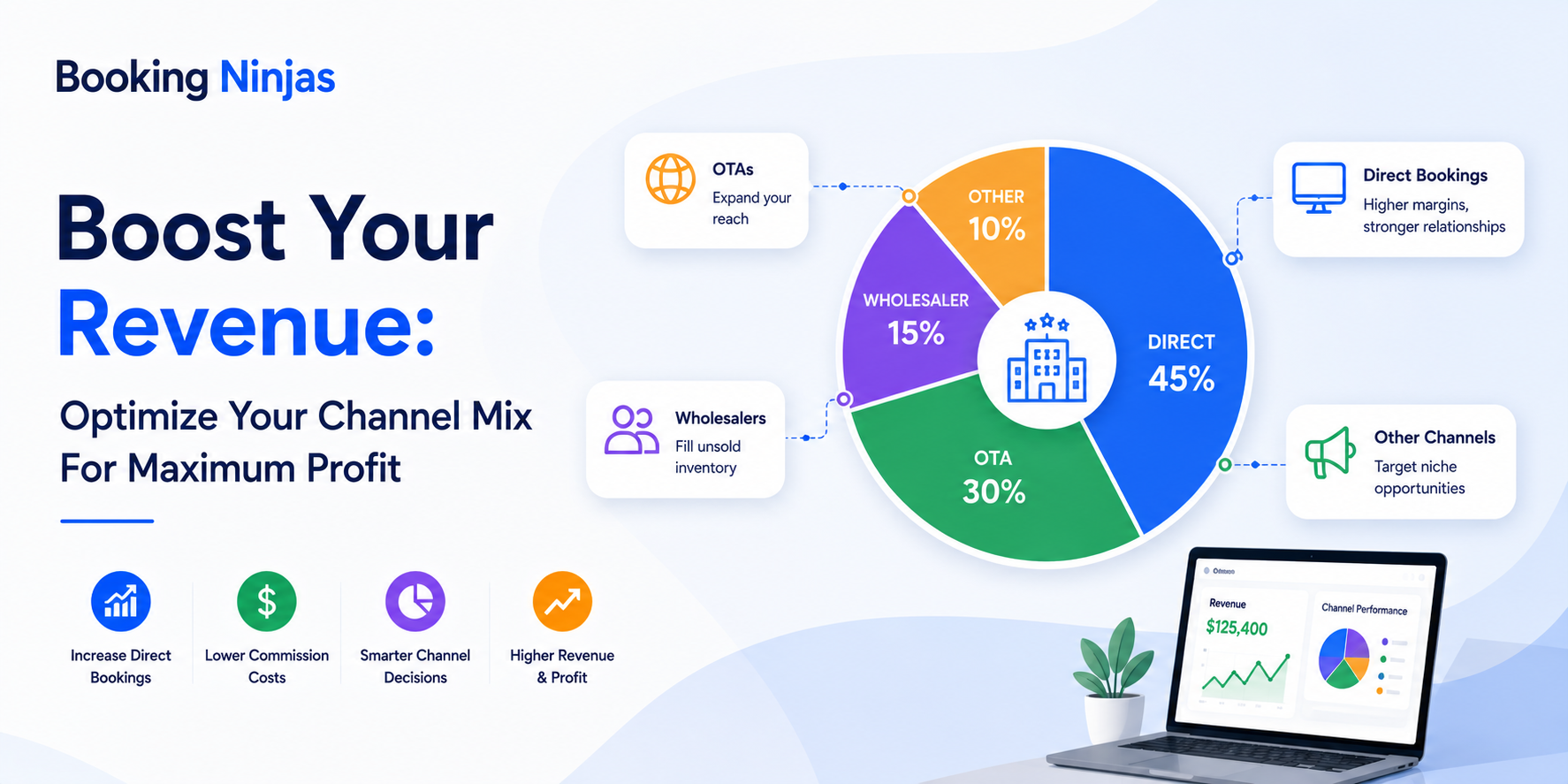
How do direct bookings and OTAs fit into real-time reservation management?
Distribution is a separate but closely connected layer.
A hotel may receive reservations through its own booking path and through connected third-party booking platforms. The relevant rates, availability, and reservation activity need to remain aligned across the supported channels.
Booking Ninjas' Channel Manager connects rates, availability, and reservations with supported OTA and booking channels.
Is booking a room type the same as assigning the final room?
Not necessarily.
A hotel can accept a booking against a room category before determining the exact physical room the guest will occupy. Assignment may happen later as the arrival date approaches or as operational conditions become clearer.
Separating the commercial reservation from the final room assignment can give staff more flexibility when dealing with:
- Room changes
- Maintenance restrictions
- Arrival sequencing
- Room-readiness status
- Guest requirements
- Operational exceptions
The important requirement is that the final assignment remains connected with the original reservation rather than becoming a separate manual record.
What changes when the guest arrives?
The reservation moves from a future booking into an active stay.
Arrival workflows may need to confirm:
- Reservation status
- Guest information
- Room assignment
- Room readiness
- Outstanding payment requirements
- Relevant documents or policies
- Special requests
- Arrival or access workflow
The Booking Ninjas booking environment includes check-in and check-out workflows alongside reservation, availability, occupancy, rate, and other booking capabilities.
The exact arrival process depends on the property's configured policies, integrations, payment process, and level of staff or guest self-service.
Why should the guest record remain separate from the reservation?
A guest can have more than one reservation.
Keeping the guest relationship distinct from an individual booking allows the hotel to maintain a broader customer history without recreating the person as a new record for every stay.
Depending on the available data and permitted use, a connected guest profile may include:
- Contact details
- Reservation history
- Communication history
- Service requests
- Transaction relationships
- Appropriately recorded preferences
Booking Ninjas' Guest Portal can expose permitted booking, profile, billing, document, communication, and service information to the guest through a controlled self-service experience.
How should payments connect to reservations?
A payment should remain traceable to the reservation, invoice, customer, and financial activity it belongs to.
Depending on the property's workflow, the reservation lifecycle may involve:
- Deposits
- Prepayments
- Outstanding balances
- Stay charges
- Add-ons
- Refunds or reversals
- Payment status
- Financial reconciliation
Booking Ninjas' Payment Processing connects transaction records with bookings, invoices, customer records, refunds, and other configured financial workflows.
Payment gateways, processors, methods, and compliance requirements still depend on the implementation and external financial systems involved.
Why should reservation data connect with daily hotel operations?
A reservation tells the hotel that a guest is expected. Daily operations determine whether the room and associated services are actually ready for that stay.
Reservation changes can therefore affect:
- Housekeeping planning
- Room turnover
- Maintenance availability
- Guest requests
- Staff coordination
- Arrival preparation
- Departure activity
- Operational reporting
The broader Booking Ninjas hospitality environment connects reservations with guests, payments, operational workflows, and reporting within the same Salesforce-native platform.
How does reservation management change across multiple hotels?
A portfolio needs both property-level control and centralized visibility.
Individual hotels may have their own rooms, rates, availability, operating rules, staff, and reservations, while central teams may need to review activity across the entire group.
Multi-property reservation management can therefore require visibility by:
- Property
- Room or room type
- Reservation status
- Arrival and departure
- Booking source
- Occupancy
- Revenue or payment activity
- Operational status
A shared platform also makes it possible to preserve consistent data relationships while still allowing property-specific workflows and permissions.
What can hotels learn from connected reservation data?
Reservation reporting becomes more useful when the booking record can be analyzed together with availability, rates, channel, customer, financial, and operational information.
| Question | Relevant records |
|---|---|
| How much inventory is committed? | Reservations, room inventory, availability, dates. |
| How are booking patterns changing? | Creation dates, stay dates, booking pace, room types, channels. |
| How are rates performing? | Booked rates, stays, occupancy, pricing periods. |
| Which booking sources are being used? | Reservation source, channel, direct-booking activity. |
| Where are operational exceptions occurring? | Reservation changes, room status, service activity, work records. |
| What is the financial position? | Reservations, invoices, payments, balances, adjustments. |
Booking Ninjas' Insights layer provides reporting and decision-support capabilities across operational, customer, and financial information.
Does real-time reservation management automatically mean dynamic pricing?
No.
Reservation management and pricing are connected but distinct functions.
Reservation data can provide useful context for pricing decisions, while Rate Management controls seasonal rates, dynamic conditions, minimum and maximum rates, thresholds, overrides, and other configured pricing rules.
AI or forecasting can support pricing analysis where suitable data and configuration exist, but pricing recommendations do not guarantee future occupancy or revenue.
How should hotels think about reservation-data security?
Reservation systems can contain personal, operational, and financial information, so access should be governed according to the role and responsibility of each user.
Important controls can include:
- User authentication
- Role-based permissions
- Controlled record access
- Audit and activity history
- Secure integrations
- Payment-data controls
- Retention policies
- Organizational security procedures
Booking Ninjas is built on Salesforce, which provides the broader identity, permissions, security, monitoring, and governance foundation used by the application.
Security and regulatory compliance remain a shared responsibility. The hotel or operating organization remains responsible for its users, permissions, configuration, integrations, policies, devices, data practices, and applicable legal or regulatory obligations.
Where can AI support reservation management?
AI can add an analytical layer to connected reservation data.
Depending on the available information and configured workflow, AI can support:
- Pattern detection
- Booking-pace analysis
- Demand forecasting
- Pricing analysis
- Anomaly identification
- Operational prioritization
- Summarization
- Decision support
AI is not required for reservations to update in real time. Rule-driven reservation, availability, communication, and workflow automation can operate independently of AI.
What should hotels test when evaluating reservation software?
- Create a reservation. Confirm how the booking affects the relevant room or room-type availability.
- Modify the stay. Change dates or room requirements and review what updates across availability, rate, billing, and operations.
- Cancel the reservation. Review inventory release, cancellation rules, payment effects, and reservation history.
- Handle an OTA reservation. Follow how a booking from a connected channel enters the reservation environment.
- Assign and change a room. Confirm that assignment changes preserve the wider booking and guest history.
- Process arrival and departure. Review how stay status connects with room readiness, billing, guest information, and subsequent availability.
- Review the reports. Confirm that the same reservation can be analyzed through occupancy, rate, channel, financial, customer, and operational views where relevant.
How does Booking Ninjas connect real-time hotel reservations with operations?
Booking Ninjas is a Salesforce-native platform for bookings and operations . Its hospitality environment connects reservations, availability, guests, rates, payments, distribution, operational workflows, and reporting within the broader Salesforce platform.
The objective is not only to maintain an accurate booking calendar. It is to keep the information surrounding each stay connected as the reservation changes.
Create, modify, track, control, and report on reservations within a structured Salesforce-native booking workflow.
Explore Reservation Management →Keep rooms and other reservable inventory aligned with bookings, restrictions, changes, and operational conditions.
Explore Availability Management →Connect relevant reservations, rates, and availability with supported OTA and booking channels.
Explore Channel Manager →Provide controlled guest access to reservations, profile information, payments, documents, communication, and service requests.
Explore Guest Portal →Connect payment transactions with reservations, invoices, customer records, refunds, and financial workflows.
Explore Payment Processing →Connect reservation workflows with the wider hospitality environment across guests, billing, daily operations, and reporting.
Explore Hospitality →Frequently asked questions
What is real-time reservation management?
Real-time reservation management keeps reservation information and the relevant availability, guest, rate, billing, distribution, and operational records aligned as bookings are created, changed, canceled, assigned, checked in, or completed.
What is the difference between reservation management and availability management?
Reservation management controls the booking record and its lifecycle. Availability management controls whether rooms, resources, or capacity can be booked for particular dates and conditions. A reservation change can therefore trigger an availability change without making the two functions identical.
Does real-time reservation management prevent every overbooking?
No system should be treated as an absolute guarantee against every overbooking scenario. Connected availability, reservation rules, channel synchronization, capacity controls, and operational processes can reduce conflicts, but outcomes still depend on the configuration, integrations, channels, data flows, and exception handling involved.
Can hotel reservations from OTAs appear in the same system?
Yes, where the required booking-channel connection is supported. Booking Ninjas Channel Manager connects reservations, rates, and availability with supported OTAs and booking platforms so the resulting booking activity can be managed centrally.
Can guests manage reservations themselves?
Booking Ninjas Guest Portal can provide guests with access to booking details and configured reservation modifications, along with payments, documents, communication, and service requests. The actions available depend on the property's rules and permissions.
Does real-time reservation management require AI?
No. Reservation updates, availability rules, notifications, and other workflow automation can operate without AI. AI can add pattern detection, forecasting, summarization, anomaly detection, pricing analysis, and other forms of decision support where the required data is available.
Is Booking Ninjas reservation management built on Salesforce?
Yes. Booking Ninjas Reservation Management is Salesforce-native, allowing reservation records to connect with Salesforce data, workflows, permissions, automation, reporting, and integrations.
Connect the reservation to the whole stay
See how Booking Ninjas can connect rooms, availability, reservations, guests, channels, payments, and hotel operations within a Salesforce-native environment.




.jpg)
