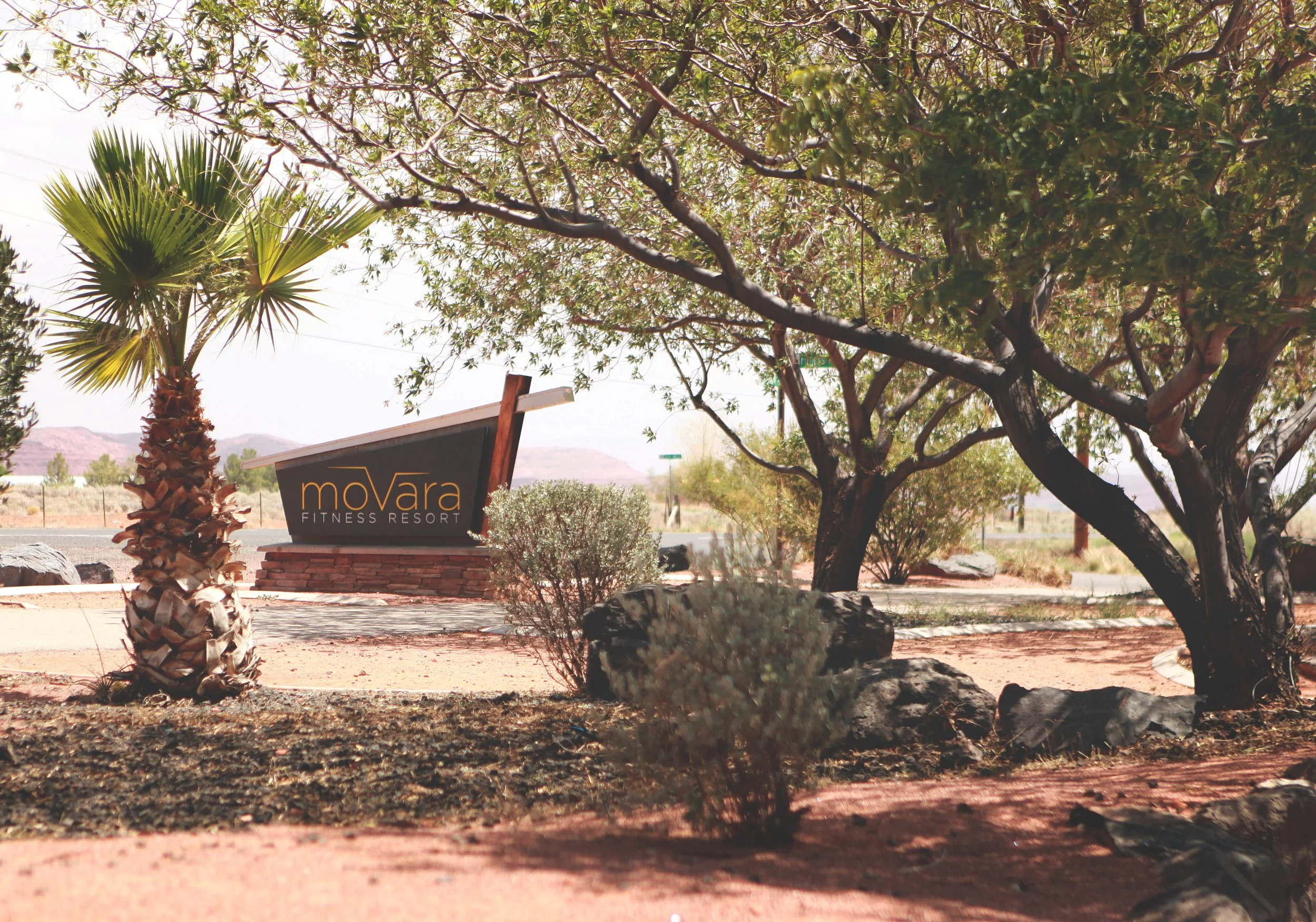

Movara Fitness Resort did not sell a simple room night. Its guests came for a structured wellness stay where accommodation, meals, exercise, programming, services, and payments all had to work together.
Movara Fitness Resort in Ivins, Utah combines lodging with a structured fitness and wellness experience that can extend from a shorter visit into multi-week programs.
Booking Ninjas worked with Movara to configure a Salesforce-native resort environment around the way those stays were actually sold and operated.
The challenge: one room could represent several kinds of inventory
Movara's accommodation model quickly showed why a normal one-room, one-reservation setup was not enough.
The same physical room could be sold privately to one guest or shared between multiple program participants.
Internally, a room such as 101 could therefore have related inventory such as 101A and 101B.
If the main room was booked privately, both shared positions needed to become unavailable. If one shared position was booked, the system needed to prevent the same room from being sold again as private inventory.
- King Private
- King Double
- Queen Private
- Queen Double
- Villa Private
- Villa Double
- Villa Triple
- Connected parent-child inventory
Booking Ninjas configured the inventory around Movara's real rules
Booking Ninjas worked with Movara on parent-and-child availability behavior so private and shared inventory could affect each other automatically.
That is a good example of the wider implementation approach: start from how the business actually sells the resource, then configure the system around that logic.
Booking Ninjas' current Reservation Management and booking platform use the same wider model by connecting reservations directly with inventory, availability, capacity, pricing, and operational rules.
The product was a wellness package, not simply a room
Accommodation was only one part of what the guest was buying.
A stay could bring together lodging, meals, exercise access, fitness programming, and other wellness components.
Those components could have different tax treatment, while the final price could also depend on occupancy, stay length, season, loyalty status, and promotional rules.
Longer reservations could even cross different pricing periods during the same stay.
Private or shared lodging establishes part of the package and inventory requirement.
Meals, exercise, and wellness programming form part of what the guest is purchasing.
Length, occupancy, dates, loyalty, and promotions can change how the stay is priced.
Deposits, balances, invoices, and payment history stay connected to the reservation.
The final reservation carries the operating detail behind the guest's full experience.
Booking Ninjas approached this as package and rate management rather than reducing everything to one nightly room rate.
The current Rate Management capability similarly supports seasonal, calendar-based, and rule-driven pricing inside Salesforce.
How the Movara operating model fit together
| Movara needed | Booking Ninjas approach | What the setup could make easier |
|---|---|---|
| Private + shared room inventory | Connected reservation and availability rules | Private and shared versions of the same physical room could block each other correctly. |
| Different wellness packages | Package + Rate Management | Accommodation, program components, dates, occupancy, and pricing rules could remain part of the same stay structure. |
| Long and short stays | Rule-Based Pricing | Different pricing periods and stay lengths could be handled without reducing every reservation to one fixed nightly rate. |
| Deposits and balances | Reservation + Payment Workflows | Prepayments, remaining balances, invoices, cards, and payment history could stay connected to the guest's reservation. |
| Know room readiness | Housekeeping Status | Checkout could move a room into vacant-dirty status before housekeeping returned it to vacant-clean and available inventory. |
| Sell services during the stay | Point of Sale | Spa services, personal training, merchandise, excursions, and other purchases could stay connected to the guest and reservation. |
| Keep prepaid and incidental spend clear | Billing + POS Structure | The prepaid wellness package could remain distinct from additional purchases made after arrival. |
The reservation became the start of the guest operation
Movara's staff needed much more than a booking confirmation.
They needed to understand who was arriving, who was currently in-house, which room a guest occupied, whether balances remained, what had been paid, and when accommodation was ready to sell again.
Booking Ninjas worked toward keeping those processes around Salesforce-native reservation records so the booking could remain useful throughout the stay.
That turns the reservation from a sales record into something operations can continue using after the guest arrives.
Availability depended on operational room status too
A guest checking out does not automatically mean the room is ready for the next arrival.
Movara needed the room to move through a simple but important sequence:
That connects housekeeping directly with inventory control.
A room may physically be empty but still should not be treated as sellable inventory until the operational status says it is ready.
This is why availability is more useful when it reflects both reservations and the real condition of the resource.
The resort experience continued after the wellness package was purchased
Movara's on-property transactions also looked different from a normal restaurant-focused resort POS.
Guests could purchase massages, personal training, pro-shop merchandise, private hikes, excursions, meals to go, and other wellness services or incidentals.
Booking Ninjas worked toward a POS experience shaped around those actual purchases rather than around a generic restaurant-table workflow.
The wider goal was to keep additional spending connected to the guest and reservation while still distinguishing it from the prepaid wellness package.
Booking Ninjas' current POS similarly links transactions with bookings, services, memberships, and customer records inside Salesforce.
The system was built through real operational feedback
A defining part of the Movara project was the implementation process itself.
Booking Ninjas reviewed the existing operation, created the Salesforce environment, and worked through recurring review and testing sessions with Movara's team.
That feedback exposed details that would be easy to miss in a generic resort implementation: how shared-room labels should appear, how inventory should block, how package components should be priced, how room status should change, and how prepaid program charges should differ from incidentals.
The implementation was deliberately phased.
The core reservation and PMS workflows came first, with deeper POS, accounting, reporting, credits, and supporting processes intended to follow.
What the project demonstrated
Movara ultimately paused the broader implementation and continued using its existing PMS while focusing on other business priorities.
The planned full PMS, accounting, and POS replacement therefore did not reach completion.
The substantial implementation work still demonstrated how Booking Ninjas could model an unusually complex wellness-resort operation.
Private and shared versions of the same accommodation could be modeled without allowing conflicting reservations.
The reservation structure could account for stay length, occupancy, seasonal periods, packages, promotions, and different pricing components.
Reservations, room status, payments, guest information, and other operational activity could share the same Salesforce foundation.
Inventory could reflect whether accommodation was actually ready for another guest, not simply whether the previous guest had departed.
Additional services and purchases could be designed around the guest and reservation rather than becoming isolated transactions.
The project showed how a wellness resort with unusual rules could be modeled without reducing it to a conventional hotel template.
Movara did not need another generic hotel PMS
The resort's product was different by design.
Private and shared inventory worked differently. Wellness programs shaped the price. Stays could run for weeks. Guests made additional purchases around the program. Housekeeping status affected whether inventory was truly ready.
A rigid PMS could force those differences into workarounds.
Booking Ninjas took the other approach: use Salesforce as the operating foundation, then configure the reservation, pricing, payment, service, and operational rules around the organization.
That principle remains central to Booking Ninjas today: different operations can use the same platform foundation without having to follow the same business rules.
Learn more about this kind of resort setup
See how bookings, inventory, capacity, restrictions, and operational rules determine whether a resource can actually be booked.
How Availability Is Managed →See how reservations, payments, services, and other approved activity can remain connected around the same guest.
What Is a Customer Record? →See how Booking Ninjas connects complex reservations with pricing, availability, operational rules, and Salesforce workflows.
Explore Rate Management →About this story: Booking Ninjas completed substantial configuration and implementation work with Movara Fitness Resort around private and shared accommodation inventory, wellness packages, complex pricing, payments, room status, guest operations, POS requirements, and phased expansion. Movara later paused the broader implementation and continued with its existing PMS, so this page does not present Booking Ninjas as Movara's completed production PMS or claim unverified financial or operational results.
Your resort should not have to simplify its product to fit its PMS.
See how Booking Ninjas can connect complex inventory, packages, rates, guests, payments, services, room status, and operations around the way your stay actually works.


.jpeg)







.jpg)

















.png)