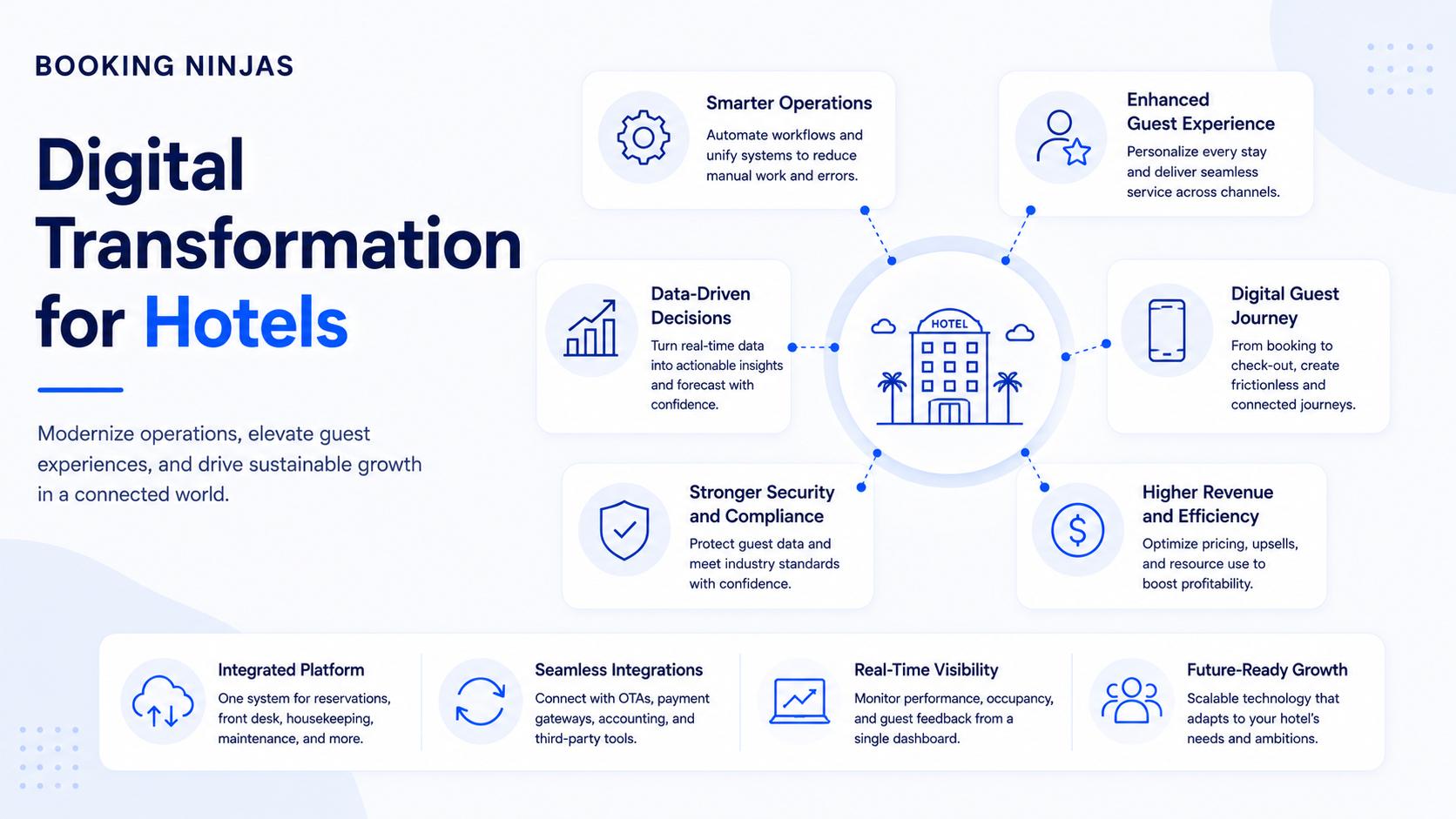
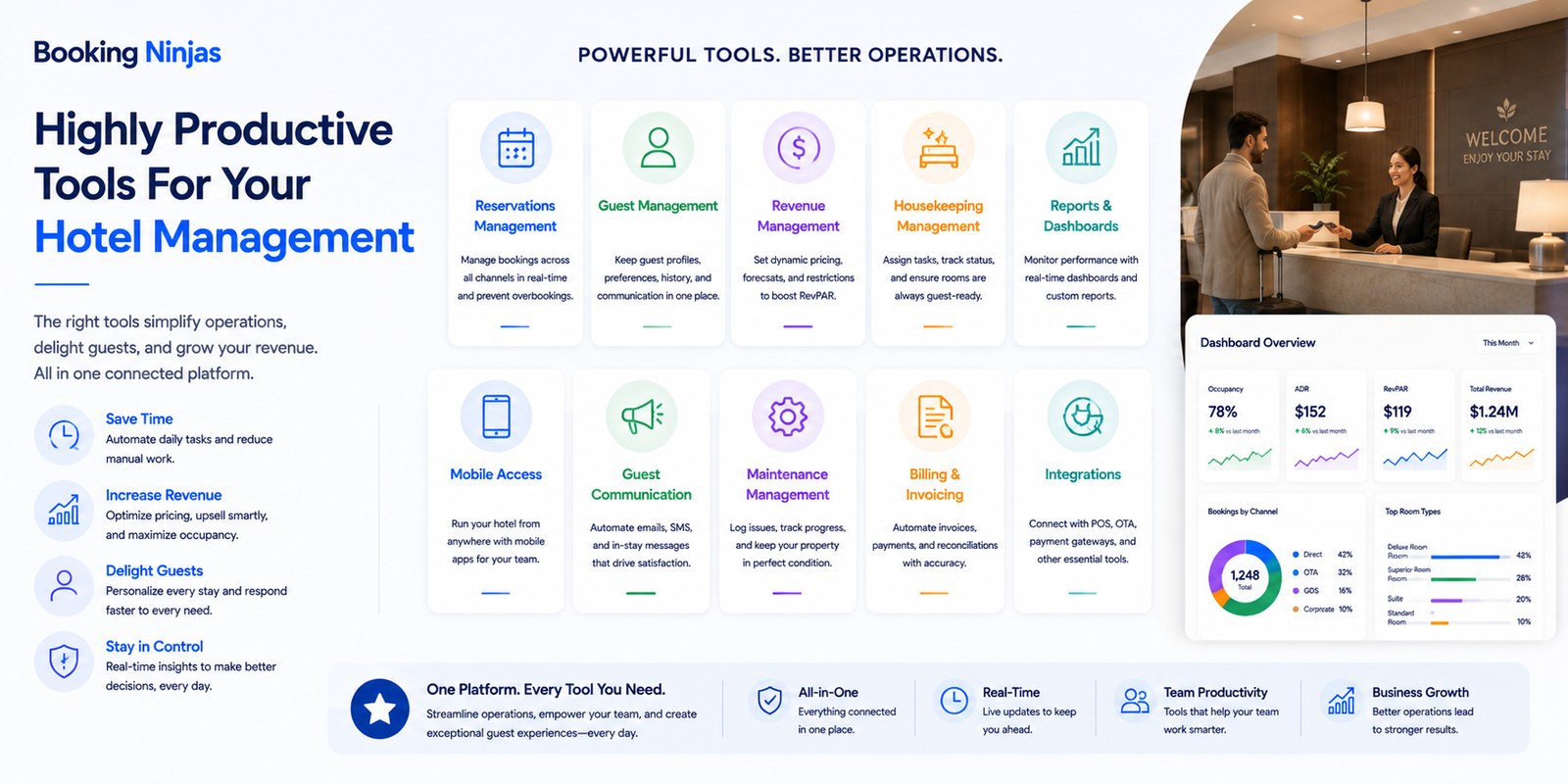
Hotel management software is not one tool. A hotel technology stack can include property management, reservations, pricing, distribution, payments, point of sale, operational workflows, analytics, workforce systems, marketing platforms, and specialist applications.
That makes hotel technology selection an architecture question rather than a shopping list. Before choosing another application, determine which process it needs to support, which data it requires, which system should own that data, and how the new tool will connect with the rest of the operation.
What tools make up a modern hotel technology stack?
| Technology | Primary job | Key connection |
|---|---|---|
| Property management system | Manage the operational records around properties, reservations, customers, stays, billing, and daily work. | Connect commercial and operational activity. |
| Reservation and booking system | Create, modify, track, cancel, and govern reservations. | Availability, inventory, guest, rates, and operations. |
| Rate / revenue management | Manage rates and support pricing and revenue decisions. | Availability, demand information, reservations, and revenue. |
| Channel manager | Exchange rates, availability, and reservations with supported distribution channels. | PMS, inventory, pricing, and OTAs. |
| POS and payments | Record transactions and process eligible charges or payments. | Customer, reservation, service, invoice, and financial data. |
| Operations / workflow software | Coordinate housekeeping, maintenance, requests, tasks, approvals, and other work. | Property, room, stay, customer, and staff context. |
| Business intelligence | Analyze operational, customer, revenue, and financial data. | PMS and other systems of record. |
| Workforce tools | Support scheduling, staffing, training, and employee processes. | Demand, operating schedules, departments, and HR systems. |
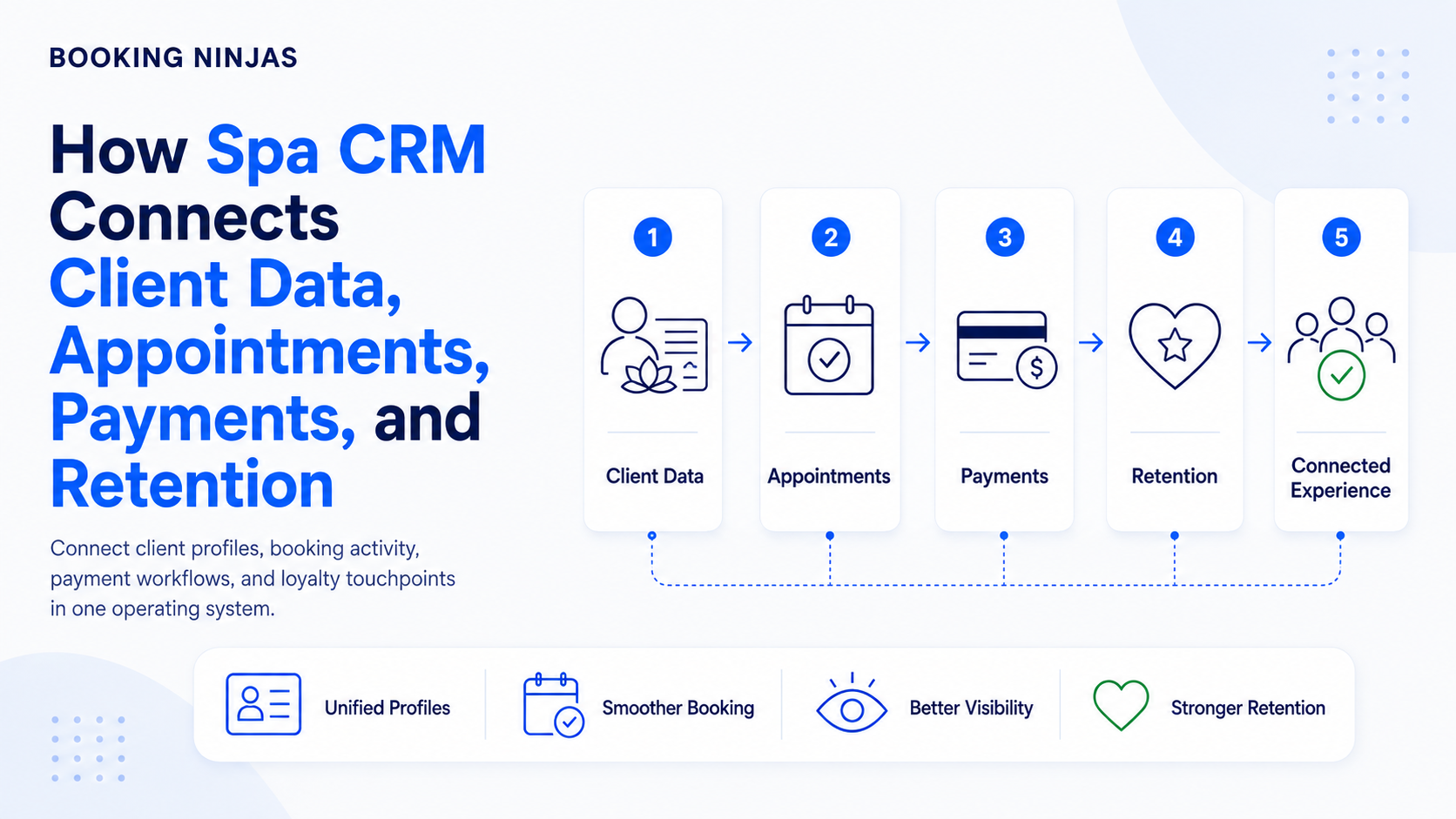
| Marketing and CRM tools | Manage leads, campaigns, customer relationships, and communication. | Customer identity, consent, reservations, and attribution. |
| Specialist tools | Support property-specific needs such as digital signage, access systems, learning platforms, or external services. | Depends on the operating use case. |
How should these hotel systems work together?
Rates, availability, booking channels, and reservation rules determine how inventory can be offered.
A booking becomes a structured reservation connected with the guest, rate, property, room, source, and stay dates.
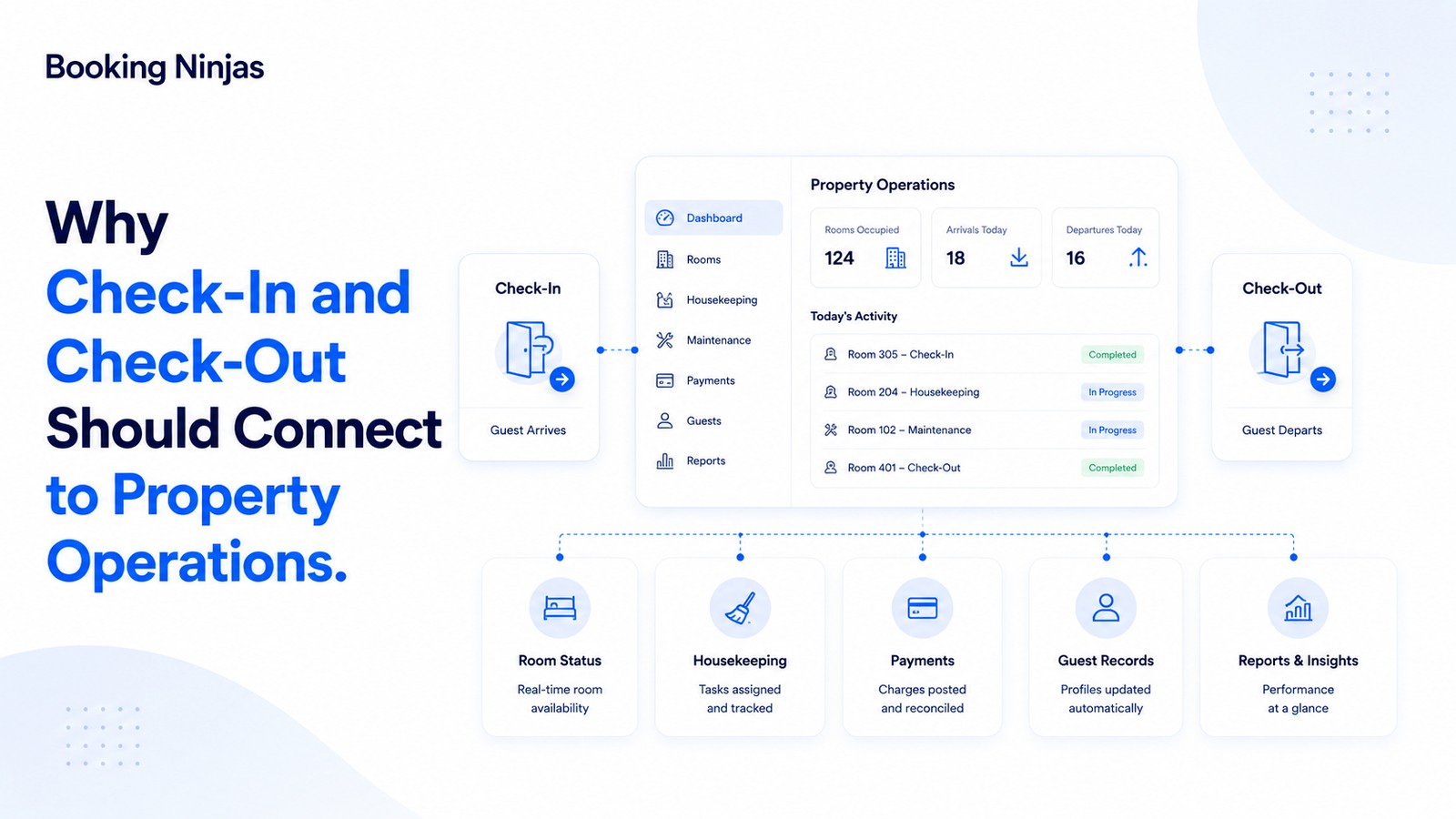
Staff coordinate check-in, housekeeping, requests, maintenance, services, charges, and other stay activity.
Reporting combines relevant history so managers can review performance and decide what to change next.
1. What role should the property management system play?
The PMS usually sits close to the hotel's daily operating activity. It can provide the record structure connecting rooms, reservations, guests, charges, operational statuses, and workflows.
A PMS does not have to replace every specialist platform. The more important question is whether teams know which records belong in the PMS and which records belong elsewhere.
- Property and room records
- Availability
- Reservations
- Guest context
- Stay status
- Charges and payment context
- Requests and operational work
- Reporting relationships
Booking Ninjas' Hotel Management environment connects hotel reservations, guests, payments, operations, and reporting on a Salesforce-native platform.
2. Where does reservation management fit?
Reservation management provides the structured booking record that connects commercial activity with the eventual stay.
It can connect:
- Guest or booker
- Property
- Room or resource
- Arrival and departure
- Rate
- Booking source
- Policies
- Status and changes
Booking Ninjas' Reservation Management centralizes reservation creation, updates, cancellations, rules, status, availability context, and reporting.
3. What does revenue and rate management software do?
Rate and revenue tools help hotels organize pricing logic and interpret the commercial information surrounding room inventory.
Depending on the solution and implementation, inputs can include:
- Availability
- Occupancy
- Booking pace
- Season
- Stay date
- Time to arrival
- Room or product type
- Historical demand
Booking Ninjas' Rate Management supports seasonal rules, date ranges, demand and availability inputs, occupancy or capacity thresholds, rate limits, overrides, and role-based controls.
Its Revenue Optimization layer can provide additional analysis of pricing and revenue performance.
4. Where do rate-shopping and external market-data tools fit?
Competitive-rate and market-intelligence tools provide external context. They are different from the hotel's own rate-management system because the data describes conditions outside the property.
This information may help teams investigate:
- Public competitor rates
- Rate positioning
- Market changes
- Event periods
- Channel differences
- Other externally sourced demand indicators
External rates should remain an input rather than an automatic instruction to match a competitor. Each hotel still has its own inventory, costs, positioning, demand, restrictions, and commercial objectives.
5. What does a hotel channel manager do?
A channel manager provides the distribution connection between the hotel's inventory and supported online booking channels.
Its main responsibilities can include exchanging:
- Room or unit mapping
- Availability
- Rate information
- Restrictions
- Reservations
- Reservation changes
- Cancellations
- Channel-performance information
Booking Ninjas' Channel Manager connects supported OTAs with rates, availability, reservations, inventory allocation, and channel reporting.
The exact channels and synchronization behavior depend on the provider connection and implementation.
6. How should POS and payment systems connect with hotel operations?
Hotels may collect money through rooms, food and beverage, retail, activities, amenities, services, deposits, fees, or other charges.
The important architectural question is how a transaction connects with the customer and operational record behind it.
Booking Ninjas' Point of Sale can connect transactions with customers, bookings, services, inventory, and reporting inside the wider Salesforce environment.
External payment gateways and processors may still form part of the payment architecture, depending on the payment method and implementation.
7. Why does a hotel need operational workflow tools?
A confirmed reservation does not clean the room, resolve a maintenance issue, answer a guest request, or assign work to the correct team.
The operating layer can coordinate processes such as:
- Housekeeping
- Maintenance
- Guest requests
- Inspections
- Approvals
- Task ownership
- Notifications
- Escalations and exceptions
Booking Ninjas' Workflow & Process Management supports rule-driven routing, role-based assignments, approvals, notifications, escalation, branching, and exception handling.
8. Where do staffing, scheduling, and training tools fit?
Workforce systems solve a different problem from the PMS. They can support employee scheduling, availability, time-related processes, training, onboarding, or other workforce requirements.
The connection becomes useful when staffing decisions require operational context such as:
- Property
- Department
- Operating hours
- Arrival and departure activity
- Housekeeping workload
- Events or services
- Employee role
- Assigned operational tasks
A hotel should not assume that software can determine the correct staffing level from occupancy alone. Staffing also depends on service standards, property layout, facilities, workload, opening hours, safety requirements, local rules, and the operating model.
9. What is the role of business intelligence and analytics?
Business intelligence turns connected source data into reports, comparisons, dashboards, trends, and analysis for management.
It can combine information such as:
- Reservations
- Occupancy
- Rates
- Revenue
- Channels
- Payments
- Operational work
- Customer activity
Booking Ninjas' Insights provides Salesforce-native reporting and decision-support capabilities across connected operational, customer, and financial data.
Organizations that already use dedicated enterprise analytics platforms can instead connect operational property data through Advanced Analytics & Reporting Integration .
10. Where do marketing, signage, learning, and other specialist tools fit?
Not every useful hotel technology belongs inside the PMS.
A hotel may use specialist applications for:
- Marketing campaigns
- Digital signage
- Staff learning
- Recruitment
- Customer communication
- Access control
- Accounting
- Enterprise reporting
The decision should be based on whether the specialist tool has a legitimate job in the architecture—not whether the PMS can theoretically absorb every function.
When information needs to move between systems, Booking Ninjas' Integrations layer can support API, middleware, iPaaS, CRM, accounting, ERP, analytics, payment, communication, and other connections according to implementation scope.
What is the difference between an integrated stack and a disconnected stack?
| Question | Disconnected environment | Connected environment |
|---|---|---|
| Who owns the reservation? | Different systems contain competing copies. | An authoritative reservation record is defined. |
| How does data move? | Staff re-enter or manually export information. | Required data flows are intentionally mapped. |
| How are failures handled? | Missing data is discovered later by employees. | Integration errors and exceptions have ownership. |
| How are permissions governed? | Users accumulate broad or inconsistent access. | Access is aligned with defined roles and responsibilities. |
| How is reporting built? | Teams reconcile multiple exports before reporting. | Metrics use defined source data and relationships. |
| How does the stack change? | New tools create another isolated data set. | New systems are evaluated against an existing architecture. |
How should a hotel choose management tools?
- Start with the workflow. Document the operating problem instead of starting with a vendor or software category.
- Define the system of record. Decide which platform should own the reservation, customer, payment, rate, operational, or other important record.
- Identify required integrations. Determine which systems genuinely need to exchange information.
- Map the data flow. Define fields, direction, timing, triggers, mappings, and error handling.
- Review permissions. Determine which roles require access to which records and actions.
- Test operational exceptions. Evaluate cancellations, refunds, overrides, outages, unusual reservations, failed integrations, and other non-standard cases.
- Define reporting. Establish the KPIs and management questions the architecture must support.
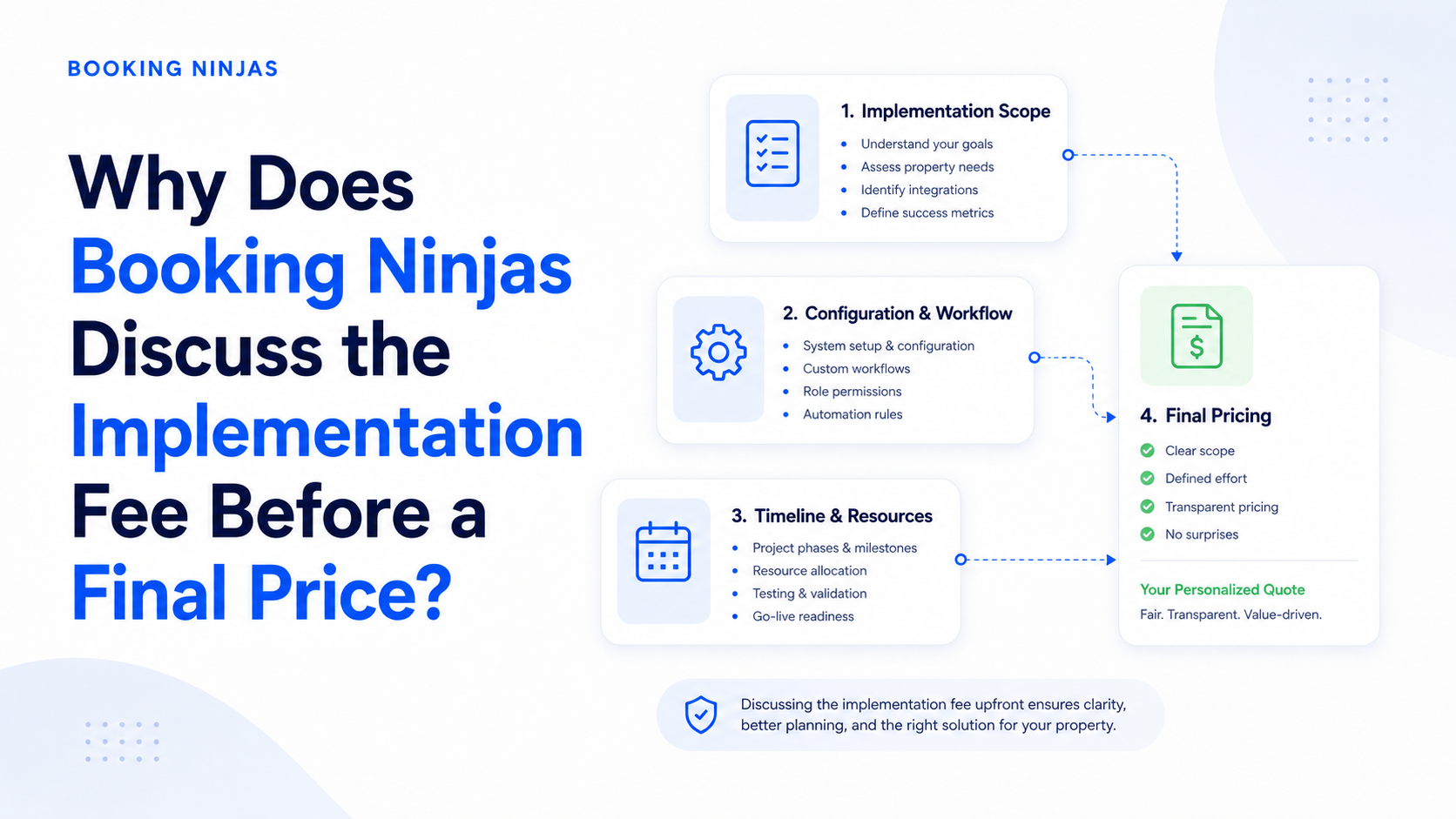
- Evaluate implementation. Include migration, configuration, testing, integrations, training, cutover, and support—not just software licensing.
- Plan for change. Consider how the architecture will accommodate new properties, services, channels, workflows, and external systems later.
Should a hotel try to run everything in one system?
Not necessarily.
Centralization can reduce fragmentation when related hotel records and workflows benefit from sharing the same operating foundation. But specialist systems can remain appropriate when they provide a dedicated capability the business genuinely needs.
A better architectural goal is: one clearly governed operating model, even when more than one software platform participates in it.
For example, a hotel may keep a specialized accounting or enterprise analytics platform while using the PMS as the operational source for reservations and stay activity. The systems can exchange only the information required for the relevant process.
How does Booking Ninjas fit into the hotel technology stack?
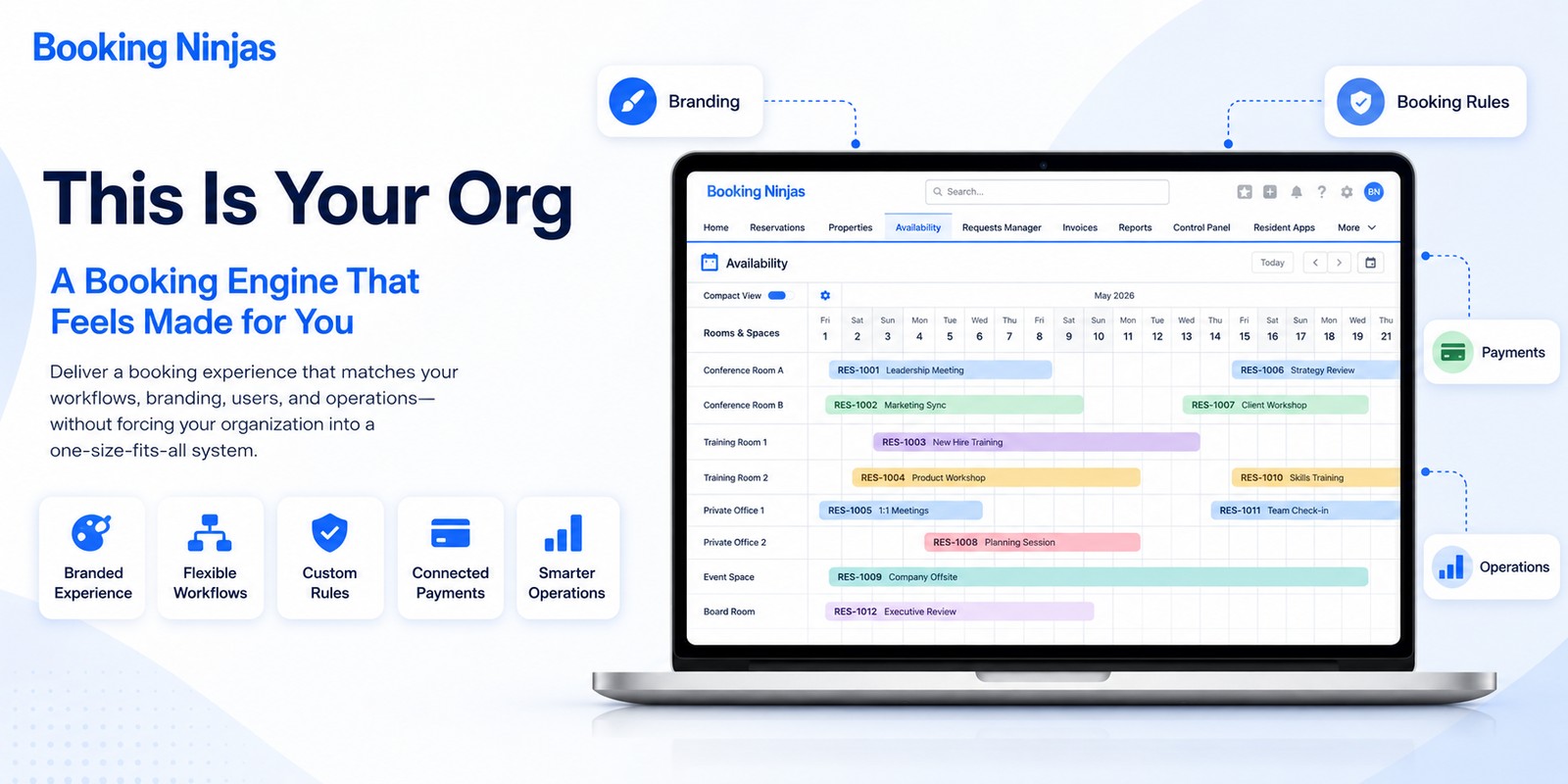
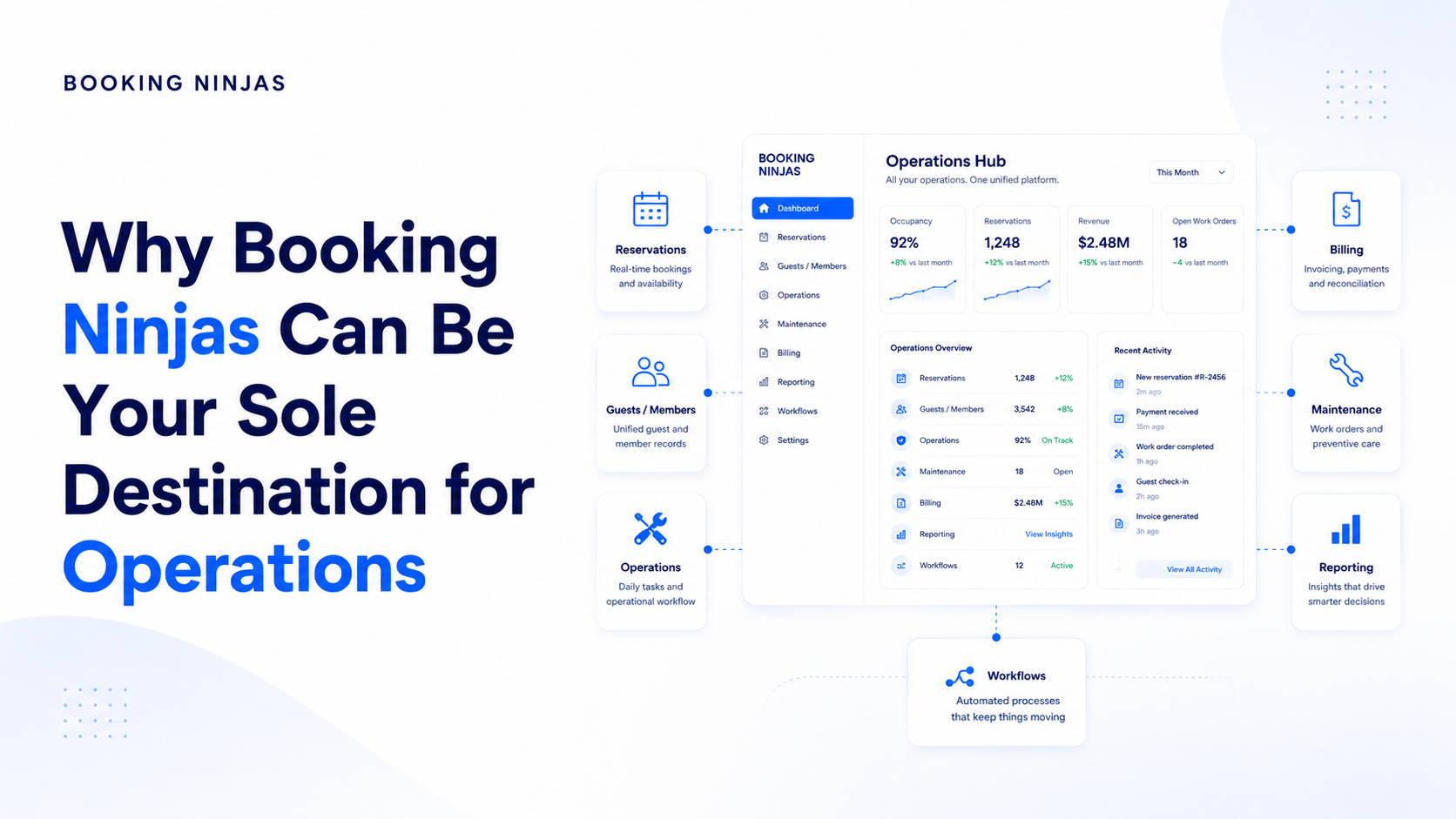
Booking Ninjas is a Salesforce-native platform for bookings and operations . Reservations, guests, pricing, billing, operational workflows, reporting, permissions, automation, and integrations can therefore use the broader Salesforce platform foundation according to the configured implementation.
The objective is not to force every hotel technology into one product. Booking Ninjas can provide the connected operational layer while specialist payment, accounting, ERP, analytics, identity, access, distribution, or other systems participate where required.
Connect rooms, reservations, guests, payments, operations, and reporting.
Explore Hotel Management →Connect reservations, availability, capacity, pricing, and booking workflows.
Explore Booking Management →Connect supported distribution channels with rates, availability, reservations, and channel reporting.
Explore Channel Manager →Manage rate structures, seasonal rules, overrides, and demand-related pricing logic.
Explore Rate Management →Connect on-site transactions with customers, services, bookings, inventory, and reporting.
Explore Point of Sale →Coordinate assignments, approvals, routing, notifications, escalation, and operational exceptions.
Explore Workflow & Process →Report across connected customer, operational, revenue, and financial information.
Explore Insights →Connect specialist systems through APIs, middleware, iPaaS, and other supported integration approaches.
Explore Integrations →Frequently asked questions
What are the main hotel management tools?
A hotel technology stack can include a property management system, reservation management, rate or revenue management, channel management, point of sale and payments, operational workflow software, business intelligence, workforce tools, marketing platforms, and other specialist systems required by the property.
What is the most important hotel management system?
There is no universal answer for every hotel. The PMS commonly provides the operational foundation around rooms, reservations, guests, stays, billing, and daily activity, while specialist systems can manage functions such as distribution, accounting, payments, analytics, workforce management, or other requirements.
What is the difference between a PMS and an RMS?
A PMS primarily manages property and stay operations, while revenue or rate management software focuses on pricing, forecasting, demand analysis, and revenue-related decisions. The two systems can exchange availability, reservation, rate, and performance information where appropriate.
What is the difference between a PMS and a channel manager?
The PMS manages the property's operational reservation records, while a channel manager connects rates, availability, and reservations with supported external booking channels. The exact boundary depends on the architecture and products being used.
Does a hotel need separate business intelligence software?
Not always. Some hotel platforms provide sufficient operational reporting and analytics internally. Organizations with wider enterprise reporting requirements can also connect hotel data with dedicated BI, visualization, warehouse, or analytics platforms.
Should every hotel tool integrate with the PMS?
No. Systems should exchange information when a business process requires it. Each integration should have a defined purpose, data scope, system of record, direction, authentication model, error process, and owner.
Is an all-in-one hotel system always better?
No. Consolidating related workflows can reduce fragmentation, but specialist applications may still be appropriate. The stronger goal is a governed architecture in which each system has a clear responsibility and required data moves reliably between them.
Is Booking Ninjas built on Salesforce?
Yes. Booking Ninjas is Salesforce-native, allowing hotel reservations, property data, operational workflows, permissions, reporting, automation, customer context, and integrations to use the broader Salesforce platform foundation.
Design the hotel stack around the operation
See how Booking Ninjas can connect reservations, pricing, distribution, payments, operational workflows, reporting, and external systems within one Salesforce-native operating environment.